






For overseas forex cashback services, try Money Charger

A complete guide to filing your tax return for overseas forex trading! How to avoid losing money on taxes?

Posted by: MoneyChat Editorial Department

Profits earned from overseas forex trading are considered income in Japan, so once you earn a certain amount of profit, you must file a tax return and pay taxes.

Tax returns are generally required to be filed between February 16th and March 15th of the following year, based on income earned from January 1st to December 31st of each year. It's a good idea to prepare in advance

Therefore, in this article, in addition to explaining how to file your tax return, we will also thoroughly explain various deductions and penalties to avoid losing money on taxes

Contents

Before we get to how to file your tax return for overseas forex trading, check this first!

Before looking at how to file your tax return for overseas forex trading, let's first understand what a tax return is

In essence, filing a tax return is "a procedure to report the amount of tax that should be paid to the government."

the process of calculating your income and tax liability for the period from January 1st to December 31st each year .

Since taxes are calculated based on income, if your taxable income for the year is negative, you do not need to file a tax return

However, if you have already withheld taxes or estimated tax payments, you will need to file a tax return so that any overpayment or underpayment can be settled

set from February 16th to March 15th of the following year

Failure to file a tax return will result in penalties

If you are required to file a tax return and fail to do so by the deadline, you will incur the following penalties and have to pay extra taxes

  • Failure to declare taxable income will result
    in a penalty tax of 15% to 20%.
  • If you file or pay taxes after the deadline,
    a late payment penalty of 2.4% to 14.6% will
  • In cases of serious negligence such as concealing income, a heavy
    penalty tax of 35% to 40% will be imposed.
  • If you file your return after the deadline, or if there are missing documents or concealment of information,
    your blue return status may be revoked or your special deductions may be reduced.

Profits from overseas forex trading are also subject to Japanese income tax, so be sure to file your tax return correctly if you make a profit

You need to file a tax return if you are a salaried employee and your annual income exceeds 200,000 yen

If a salaried employee earns more than 200,000 yen from overseas forex trading, they are required to file a tax return

Salaried employees

Target audience - Individuals who receive a salary from their employer, such as company employees or part-time workers. - Individuals who have income from public pensions, etc.

Generally, if your only income is your company salary, you do not need to file a tax return because your company handles the calculation and payment of your taxes

However, if a company employee earns more than 200,000 yen from overseas forex trading, or if a housewife or student earns more than a certain amount, they are required to file a tax return .

Please note that the conditions for filing a tax return include miscellaneous income other than that from overseas forex trading. If you have miscellaneous income other than from overseas forex trading, be sure to include it in the total

If you are a business owner, etc., when it exceeds 480,000 yen

If you are self-employed or do not receive a salary, you are required to file a tax return if you earn more than 480,000 yen from overseas forex trading.

Non-salaried workers

Target audience Unemployed individuals, self-employed individuals, housewives, students, and others who do not receive a salary

Unlike salaried employees who receive wage income, non-salaried individuals are required to file a tax return if their miscellaneous income (profit minus expenses, etc.) exceeds 480,000 yen .

✓ Also frequently read

List of expenses that can be deducted in overseas forex trading | Explanation of what percentage of rent and mobile phone bills should be claimed as expenses

Even if you understand that "claiming expenses" is an important tax-saving measure for overseas forex trading, you may not know which expenses are deductible or what percentage can be claimed. This article introduces what expenses are deductible in overseas forex trading and the percentages that can be claimed. Understanding the knowledge of expenses can lead to significant tax savings. If you are unsure which expenses are deductible, please refer to this article. For information on overseas forex taxes, please read the Complete Guide to Overseas Forex Taxes. Overseas Forex Tax Rules If you make a profit of a certain amount or more in overseas forex trading, you must file a tax return. Also, the tax system differs significantly from domestic forex, such as the inability to carry forward losses. Below, we will explain the rules regarding overseas forex taxes in detail. Overseas Forex Taxes are Comprehensive Taxation Overseas Forex Losses Cannot Be Carried For. Profit and Loss Cannot Be Offset with Domestic Forex Taxes Overseas Forex Taxes are Comprehensive Taxation The method of taxing profits from forex differs between overseas forex and domestic forex. Overseas forex is "comprehensive taxation," while domestic forex is subject to separate taxation. Comprehensive taxation calculates the income tax amount by adding up various income amounts. On the other hand, separate taxation is a tax system in which income tax is calculated separately from other income. Furthermore, while the tax rate for domestic FX is a flat 20.315% including the special reconstruction income tax, overseas FX employs a progressive tax system where the tax rate increases as the income amount increases. The highest tax rate for overseas FX is as high as 45%, and the tax rate increases according to the income amount, so a major difference is that domestic FX is tax-advantaged. Taxable Income Tax Rate Deduction Amount From 1,000 yen to 1,949,000 yen: 5% 0 yen From 1,950,000 yen to 3,299,000 yen: 10% 97,500 yen From 3,300,000 yen to 6,949,000 yen: 20% 427,500 yen From 6,950,000 yen to 8,999,000 yen: 23% 636,000 yen From 9,000,000 yen to 17,999,000 yen: 33% 1,536,000 yen From 18,000,000 yen to 39,999,000 yen: 40% 2,796,000 yen Above 40,000,000 yen: 45% 4,796,000 yen Source: National Tax Agency | Income Tax Rates The break-even point for overseas FX and domestic FX is approximately 3.3 million yen, but depending on the amount of expenses claimed, overseas FX may result in lower taxes even if the profit exceeds 3.3 million yen. https://money-charger.com/information/overseas-fx-tax/ Losses cannot be carried forward with overseas FX. While losses can be carried forward with domestic FX, they cannot with overseas FX. Loss carry-forward: A system that allows you to carry forward losses from the current year to the following year and offset them against profits. Even if you make a large profit in the following year, you can expect tax savings by offsetting it against losses from the previous year. As a point of caution, if you incur a large loss after the year ends and are unable to pay taxes, it will be considered tax evasion and you will be subject to heavy penalties. Therefore, if you end the year with a profit and need to file a tax return, it is recommended that you withdraw the amount of tax to be paid in advance. https://money-charger.com/information/overseas-fx-loss-tax-return/ Cannot offset profits and losses with domestic FX. Overseas FX is subject to comprehensive taxation, while domestic FX is subject to separate taxation. Because the income categories are different, profits and losses cannot be offset. Therefore, even if you make a profit of 1 million yen from overseas FX and a loss of 500,000 yen from domestic FX, you will need to pay tax on the 1 million yen. Profit and loss offsetting: A system that offsets profits and losses incurred in the same year. Overseas FX Domestic FX Tax category Comprehensive taxation Separate taxation Tax rate 5% to 45% 20.3 15% Loss carryforward Not possible Possible Profit and loss offsetting Possible Possible However, profits and losses that fall under the same miscellaneous income can be combined and declared. Examples include profits and losses from other overseas FX brokers, cryptocurrency FX, and affiliate income. When using both overseas FX and domestic FX, be sure to understand the differences in tax rates and tax categories. Points to know about overseas FX expenses Below are four points to know about overseas FX expenses. Make sure you understand the details thoroughly so you can correctly claim expenses when filing your tax return. If you make a profit from overseas forex trading, claiming expenses will result in greater tax savings. Whether or not to claim expenses is at your own discretion. Only transaction-related expenses can be deducted. Expenses cannot be carried over to the following year. If you make a profit from overseas forex trading, claiming expenses will result in greater tax savings. When you make a profit from overseas forex trading above a certain amount, taxes will be incurred, but claiming expenses when filing your tax return will result in greater tax savings. This is because while the tax rate for domestic forex is a flat 20.315%, overseas forex uses a "progressive tax" system where the tax rate increases as the profit increases. If there are few expense items, the amount of tax savings will be small, but the more expenses you claim, the more you can reduce your taxes. The items that are recognized as expenses are not publicly disclosed, but you can expect tax savings by claiming all the expenses introduced in the following section. https://money-charger.com/information/overseas-fx-tax-saving/ Whether to claim expenses is at your own discretion Many people understand that "transaction fees" and "indicator fees" related to FX trading can be claimed as necessary expenses, but it is also possible to claim a portion of electricity bills and rent as expenses. However, whether all expenses are accepted is at the discretion of the tax office, and which expense items are accepted is not publicly disclosed. Therefore, it is up to you to decide which expenses to claim and to what extent. If you have any questions about expenses, it would be best to consult with a tax professional. Only transaction-related expenses can be claimed as expenses In overseas FX tax returns, only transaction-related expenses can be claimed as expenses. For example, the following expenses are often accepted by the tax office: Transaction fees Indicator fees Books related to FX However, transportation costs, book costs, food costs, etc. that are not related to FX are not accepted as expenses. Even if you claim expenses unrelated to FX thinking "it won't be found out", tax investigators look closely at items as well as amounts, so you will definitely find out. Taking drastic measures to commit tax evasion can result in heavy penalties, so it's important to implement tax-saving strategies in accordance with the law. Expenses cannot be carried over to the following year. You cannot carry over expenses to the next year to save on taxes simply because "profits were low this year." For example, the cost of FX-related books purchased in 2025 must be recorded as an expense for the current year. As an exception, expenses exceeding 100,000 yen must be depreciated and spread over several years. Here are some expenses that can be fully deducted when trading overseas forex: Transaction fees, PC/smartphone purchase costs, consumables, overseas forex-related books, forex seminar participation fees, transportation, and accommodation expenses, VPS contract fees for automated trading, EA/indicator purchase costs, and fees for hiring a tax accountant…

Read more →

Unrealized gains and losses are not subject to taxation

Since only actual realized profits and losses are subject to taxation, unrealized gains and losses on positions that have not yet been closed are not subject to taxation.

Please note that swap points, which are received to hedge against interest rate and exchange rate fluctuations, will be subject to taxation once they are received and credited to your account

However, cashback is subject to taxation

Cashback received from FX brokers through account opening or deposit campaigns is subject to taxation

Generally, cashback is considered temporary income.

The amount subject to tax is calculated by multiplying the amount obtained by subtracting the special deduction of 500,000 yen from the temporary income by half. If you have other temporary income, you are required to file a tax return if the total taxable amount exceeds 200,000 yen

Formula for calculating temporary income : Total temporary income - Total expenses - Special deduction (500,000 yen) = Temporary income
Formula for calculating the taxable amount of temporary income : Temporary income × 1/2 = Taxable amount of temporary income

Furthermore, since temporary income is subject to comprehensive taxation, the taxable amount of temporary income is added to other income such as salary income when calculating taxes .

your taxable amount of temporary income exceeds 200,000 yen for salaried employees, or 480,000 yen for non-salaried employees, you are required to file a tax return.

✓ Also frequently read

Are cashback rewards from overseas forex trading taxable? Regarding the necessity of filing a tax return

Cashback bonuses are given for every trade. While it's common for withdrawable bonuses to be taxable, what about the tax system for cashback bonuses? In conclusion, cashback bonuses are taxable. Therefore, like profits earned from trading, you need to file a tax return. This article will explain in detail about taxes and tax returns for overseas forex trading. However, be aware that tax systems differ depending on the country you live in and whether the forex is domestic or international. Taxes and tax returns on cashback in overseas forex trading We will introduce the taxes on cashback. Cashback is taxable However, this may differ depending on your place of residence Unrealized losses and unrealized gains are not taxable Profits are treated as miscellaneous income Losses cannot be carried forward Let's look at each point in detail. Cashback is taxable Cashback is money returned in overseas forex trading according to the trading volume. This is treated the same as regular cash and is therefore taxable. For example, let's say you receive a cashback of 500 yen for every lot (100,000 currency units) traded. And let's say you trade 100 lots and make a profit of 100,000 yen. If there is no cashback, the profit of 100,000 yen will be taxed as is, but if there is cashback, the tax will be 100,000 yen + 50,000 yen = 150,000 yen. This is because such cashback can be withdrawn and is considered profit just like cash, so it is subject to taxation. When filing your tax return, do not separate cashback from simple profit, but calculate everything as profit. However, tax laws differ depending on your place of residence. If you live in Japan, all profits from overseas FX, including cashback, are subject to taxation. However, if your place of residence is different, it may be tax-exempt, so be careful. In low-tax regions known as tax havens, such as Singapore and Hong Kong, you can pay significantly less in taxes than in Japan. This is one reason why investors who make large profits reside overseas. Calculate profits earned from January 1st to December 31st. When filing your tax return, you calculate and declare profits (including cashback) earned from January 1st to December 31st. The filing period is from around February 15th to around March 15th of the following year. The filing period may vary slightly from year to year, so be sure to check each time. If you fail to file a tax return despite being taxable, you may be considered to have evaded taxes and face heavy penalties. Make sure to file your tax return correctly and avoid any omissions. You can print the tax return form from the National Tax Agency's website. There are no specific documents required to prove profits from overseas FX trading. Calculate your profits and losses using the transaction history sent by your FX broker. You can print the tax return form from the National Tax Agency's website. It contains detailed information on the necessary input fields, so it's a good idea to review it before creating your tax return. Unrealized gains and losses are not taxable. In FX trading, only profits realized between January 1st and December 31st are taxable. Unrealized gains and losses are not included. Therefore, even if you have realized profits of +1 million yen and unrealized losses of -2 million yen as of December 31st, taxes will only be levied on the realized profit of 1 million yen. If your confirmed losses reach -5 million yen after January 1st of the following year, you could end up in a situation where you have to pay taxes but have no funds on hand, so be careful. Note that taxes are levied regardless of whether you withdraw the money or not, so even if the money remains in your overseas FX account, you will be taxed. Profits from overseas FX are classified as miscellaneous income when filing your tax return. Remember that a 5-45% income tax rate (comprehensive tax rate) is levied on profits. If your profits are small, you will pay less tax, but if you make a lot of profit, you will pay a lot of tax. The following people are subject to filing a tax return for overseas FX: Salaried employees - Company employees, part-time workers, etc. - If you make more than 200,000 yen in profits in a year, you are required to file a tax return. Non-salaried employees - Self-employed, housewives, students, people with no income, etc. - If the sum of your annual income and FX profits exceeds 480,000 yen, you are required to file a tax return. The amount of profit that requires filing a tax return differs between salaried employees such as company employees and part-time workers and non-salaried employees such as the self-employed and students. Other miscellaneous income includes profits from side businesses such as affiliate marketing and cryptocurrency, so be sure to add everything up when calculating. If your salary income is low, you may not need to file a tax return. If your annual income does not meet the threshold, you may not be required to file a tax return. For example, if your annual salary from a part-time job is 700,000 yen, you can receive a maximum deduction of 1,030,000 yen, consisting of a 550,000 yen salary income deduction and a 480,000 yen basic deduction. Since there is a remaining 330,000 yen in deductions, you do not need to file a tax return if your profit (miscellaneous income) is 330,000 yen or less. However, if you want to gain experience filing a tax return, you can do so as practice. Of course, you will not have to pay taxes, so don't worry. <A withholding tax slip is required when salary earners file a tax return> If you are a company employee, part-timer, or have a side job and earn salary income, you will need a withholding tax slip when filing a tax return. Company employees usually receive one, but part-timers and side workers may need to request one from their employer, so be careful. New employees who have worked as part-timers may need to request one from their previous employer, not their new employer. Be careful with overseas forex trading, as losses cannot be carried forward. The tax systems for domestic and overseas forex trading differ. If you are already using domestic forex trading, it is a good idea to check the differences in the rules for filing tax returns. The biggest difference in the rules is "how long losses can be carried forward." With domestic forex trading, losses can be carried forward for up to 3 years, but with overseas forex trading, losses cannot be carried forward. For example, let's say you lost 1 million yen in the first year and made a profit of 400,000 yen in the second year. Since you lost 1 million yen in the first year, the profit/loss in the second year will be -600,000 yen. If you were using a domestic forex broker, you would not have to pay income tax because it is a loss. However, with overseas forex trading, losses cannot be carried forward, so you will need to file a tax return on the 400,000 yen profit. Therefore, if you are making a profit using overseas forex trading, you should file a tax return every year. Tax rates also differ between domestic and overseas forex trading. As already mentioned, the tax rate for overseas forex trading is 5-45%. However, domestic FX is subject to taxation based on self-assessment, so the tax rate is fixed at 20.315%. Domestic FX vs. Overseas FX: Tax System, Self-Assessment Taxation, Comprehensive Taxation, Tax Rate: 20.315%, 5-45%, Loss Carryforward: Up to 3 years…

Read more →

Losses cannot be carried forward

Losses incurred from overseas forex trading cannot be carried forward to the following year and therefore cannot be offset against income in subsequent years

However, if you use multiple overseas forex brokers, you are allowed to offset income from other overseas forex brokers in the same year and calculate your taxable income accordingly

Furthermore, losses incurred in domestic FX trading can be carried forward for up to three years

If you use three overseas forex brokers in the same yearCompany A: Loss of 500,000 yen Company B: Profit of 1,000,000 yen Company C: Profit of 300,000 yen

Company A's loss of 500,000 yen, Company B's profit of 1,000,000 yen, and Company C's profit of 300,000 yen are offset, and taxes are calculated on 800,000 yen for that year

If you incur losses in overseas forex tradingYear 1: Loss of 500,000 yen Year 2: Profit of 1,000,000 yen

Since losses from overseas forex trading cannot be carried forward, taxes will be calculated on the 1 million yen in the second year

If you incur losses in domestic FX tradingYear 1: Loss of 500,000 yen Year 2: Profit of 1,000,000 yen

Since losses from domestic FX trading can be carried forward, we deduct 500,000 yen from the 1 million yen profit in the second year, and then calculate the tax on the remaining 500,000 yen

Please note that overseas and domestic forex trading have different tax systems, so profits and losses from each cannot be offset against each other

✓ Also frequently read

Do I need to file a tax return for losses from overseas forex trading? We'll explain how to fill out the necessary forms and how to offset losses against gains for tax purposes!

  If you incur losses from overseas forex trading, do you need to file a tax return? Also, can losses incurred this year be carried forward to the following year? Generally, you do not need to file a tax return for losses from overseas forex trading. However, if you have profits from other miscellaneous income, you can offset those profits and losses for that year only to reduce your taxable income and thus reduce your taxes. This article explains the tax system for overseas forex trading, methods of saving on taxes, and the procedures for filing a tax return. The tax system for domestic forex and overseas forex differs, so it is important to understand it properly. For information on overseas forex taxes, please read the Complete Guide to Overseas Forex Taxes. About the Tax System and Mechanism for Overseas Forex Profits from overseas forex trading are treated as miscellaneous income and are subject to comprehensive taxation, where taxes are calculated by combining them with other taxable income such as salary income. Let's take a look at the tax system and mechanism that applies to overseas forex trading. There is no obligation to declare only overseas forex losses If you do not make any profit from overseas forex trading throughout the year and incur losses, you are not obligated to file a tax return for those losses. Tax filing is the process of calculating and declaring your taxable income for the period from January 1st to December 31st each year in order to pay the correct income tax. Since income tax is calculated based on taxable income, if you only incur losses in a given year, you will not have to pay income tax, and therefore you do not need to file a tax return. However, if you have made a profit, it is advisable to file a tax return for the losses as well. If you have other miscellaneous income in addition to overseas forex trading, you should file a tax return for both the overseas forex losses and the profits. This is because the less miscellaneous income you have, the less income tax you will have to pay. Income tax is calculated based on the taxable income generated in that year. Therefore, by offsetting profits from other sources with losses from overseas forex trading, you can reduce your taxable income and thus your income tax. This offsetting of profits and losses in the same year is called loss offsetting. For example, if you have a loss of 300,000 yen from overseas forex trading and a profit of 1,000,000 yen from cryptocurrency (miscellaneous income), you will calculate income tax on the remaining 700,000 yen in taxable income after offsetting. However, loss offsetting with domestic forex brokers is not possible. Overseas forex and domestic forex trading are categorized differently, so loss offsetting is not possible. Income tax is calculated separately for each income category, so profits and losses can be offset within the same income category. However, overseas FX is classified as "comprehensive taxation" and domestic FX as "separate taxation," so profits and losses from the same FX cannot be offset. Overseas FX Domestic FX Tax Category Comprehensive Taxation Separate Taxation Tax Rate 5% to 45% 20.3 15% Loss Carryforward Not Possible Loss Offset Possible Comprehensive taxation calculates income tax by totaling various income amounts, while separate taxation calculates income tax without totaling other income amounts. Therefore, even if you have a loss of 300,000 yen from overseas FX and a profit of 1,000,000 yen from domestic FX, you cannot offset the losses, and income tax will be calculated on the 1,000,000 yen profit from domestic FX. Also note that losses cannot be carried forward Be aware that losses incurred from overseas FX cannot be carried forward to subsequent years. While it is permitted to offset losses from overseas FX against miscellaneous income incurred in the same year to calculate taxable income, losses cannot be carried forward to subsequent years. On the other hand, losses incurred in domestic FX can be carried forward for up to three years, so you can deduct the previous year's losses from your income in the following year. If you incur losses in overseas FX, Year 1: Loss of 300,000 yen Year 2: Profit of 1,000,000 yen Since overseas FX does not allow loss carryforward, income tax will be calculated on the 1,000,000 yen in the second year. If you incur losses in domestic FX, Year 1: Loss of 300,000 yen Year 2: Profit of 1,000,000 yen Since domestic FX allows loss carryforward, in the following year, income tax will be calculated on the remaining 700,000 yen after deducting 300,000 yen from the 1,000,000 yen. Note that the tax system regarding loss carryforward differs between overseas FX and domestic FX. You need to file a tax return when your income exceeds 200,000 yen for salaried employees and 480,000 yen for business owners, etc. If the profits you earn from overseas FX exceed a certain amount, you will be taxed and will need to file a tax return. Those who need to file a tax return are as follows: Salaried Employees Eligible Individuals: - Company employees, part-time workers, etc. who receive a salary from their employer - Those with income from public pensions, etc. Condition: When annual profits exceed 200,000 yen Eligible Individuals: - Unemployed individuals, self-employed individuals, housewives, students, etc. who do not receive a salary Condition: When total annual income, including profits from overseas FX, exceeds 480,000 yen Generally, salaried employees, etc., who receive a salary from their company, have their taxes calculated and paid on their behalf by their company. Therefore, those whose only income is their salary do not need to file a tax return. However, those who have income from overseas FX in addition to their salary, or housewives and students who earn a certain amount of profit from overseas FX, are required to file a tax return. Note that income other than overseas FX is also included in the scope of income that requires a tax return. If you have other income besides overseas FX, be sure to remember to add it all up. Tax returns may not be necessary in cases of low salary income Those with low annual salary income, such as part-time workers, may not need to file a tax return even if they earn profits from overseas FX. For example, tax returns are not necessary in the cases described below. If your annual salary from a part-time job is 600,000 yen and your profits from overseas forex trading are less than 430,000 yen, the calculation is (annual salary 600,000 yen - employment income deduction 550,000 yen) + overseas forex 430,000 yen - basic deduction 480,000 yen = taxable income of 0 yen. In the case of an annual salary of 600,000 yen, you can receive a maximum deduction of 1,030,000 yen. In other words, if your profits from overseas forex trading are 430,000 yen or less, your taxable income will be 0 yen, and you will not need to file a tax return. https://money-charger.com/information/overseas-fx-tax-return/ There is also a "tax return exemption system," and pension recipients who meet the conditions do not need to file a tax return. The conditions for being eligible for the tax return exemption system are as follows: Total income from public pensions, etc. is 4 million yen or less and all of your public pensions, etc. are subject to withholding tax. Income other than miscellaneous income from public pensions, etc. is 200,000 yen or less. If the "payment amount" on your public pension withholding tax statement is 4 million yen or less and your income other than pensions is 200,000 yen or less, you will not need to file a tax return for that year. Tax saving measures! Declaring expenses can lower your taxes. Similar to how corporations and self-employed individuals can claim expenses, overseas forex trading allows you to deduct expenses from your profits. Expenses refer to the costs and expenses necessary to generate profits from overseas forex trading. By utilizing expenses to reduce profits, you can lower your income tax, making it an effective tax-saving measure. While tax evasion is illegal, tax saving is legal, so use expenses correctly and implement tax-saving strategies. Expenses unrelated to your overseas forex business are not eligible. First, expenses not used for overseas forex trading are not eligible. This means that personal consumables used at home cannot be claimed as expenses. Expenses eligible for overseas forex trading include: Purchase costs of computers and smartphones used for trading; communication costs; related books and newspapers; seminar participation fees (including transportation and accommodation); etc

Read more →

If you want to keep your taxes down, declare your expenses

To minimize taxes on overseas forex trading, make effective use of your expenses

Taxes are calculated by multiplying the tax rate by the income amount, which is the profit from overseas forex trading minus expenses and income deductions

Therefore, if you incur expenses related to overseas forex trading, you can reduce your taxable income by deducting those expenses from your profits, resulting in lower taxes.

The more deductions you can subtract from your income, the greater the tax-saving effect and the lower your taxes will be. Therefore, when filing your tax return, be sure to include income deductions other than business expenses

Expenses are based on those "linked to sales."

When accounting for expenses related to overseas forex trading, you should base your calculations on expenses that are used specifically for overseas forex trading and are linked to sales.

Therefore, personal consumables used in daily life and private meal expenses are not recognized as business expenses

Furthermore, while the full cost of a computer and internet access dedicated to overseas forex trading can be claimed as an expense, if you use it for both personal and business purposes, you can calculate the usage ratio and only include the amount used for overseas forex trading as an expense.

If you are unsure whether an item qualifies as a deductible expense, contact your nearest tax office to confirm
✓ Also frequently read

Summary of Tax-Saving Strategies for Overseas Forex Trading | Explanation of How to Avoid High Taxes and Whether Loopholes Will Be Discovered

Are there ways to reduce taxes on profits from overseas forex trading? First of all, how are taxes calculated? Effective tax-saving strategies for overseas forex trading include utilizing expenses and various income deductions to reduce taxable income. Generally, overseas forex profits are subject to a progressive tax system, meaning the higher the profit, the higher the tax rate. Furthermore, since it's treated as miscellaneous income and subject to comprehensive taxation, it must be combined with other miscellaneous income such as salary income when calculating taxes. Therefore, this article explains methods for reducing taxes on overseas forex trading and provides basic tax knowledge. For information on overseas forex taxes, please read the complete guide to overseas forex taxes. Before implementing tax-saving strategies for overseas forex trading! Essential tax knowledge you should know Let's begin by explaining the essential tax knowledge you should know before implementing tax-saving strategies for overseas forex trading. Taxes are levied on profits Overseas forex taxes are calculated based on profits from January 1st to December 31st of that year. Those with profits are generally required to file a tax return between February 16th and March 15th of the following year to calculate their income tax. Profits from overseas forex trading are treated as miscellaneous income and are subject to comprehensive taxation. Comprehensive taxation is a method of calculating taxes by combining profits from overseas forex trading with other miscellaneous income such as salary income. Profits from domestic forex trading are subject to separate taxation. Since taxes are calculated on domestic forex profits alone and not combined with other taxable income, the tax system differs from that of overseas forex trading. Those who need to file a tax return due to profits earned from overseas forex trading are as follows: Salaried employees: Those who receive a salary from an employer, such as company employees or part-time workers, or those with income such as public pensions. Condition: Annual profits exceed 200,000 yen. Non-salaried employees: Those who do not receive a salary, such as unemployed individuals, self-employed individuals, housewives, or students. Condition: Total annual income, including profits earned from overseas forex trading, exceeds 480,000 yen. The annual profit for the tax return conditions includes taxable income other than overseas forex trading. If you have other income, check whether you need to file a tax return by combining it with your overseas forex profits. Overseas forex trading is subject to a progressive tax system where the tax rate increases the more you earn. The calculation of income tax on overseas forex trading is subject to a progressive tax system where the tax rate increases as your taxable income increases. The progressive tax system is designed so that the more you earn, the higher your taxes will be, and it uses a tax rate system set up in seven stages according to your taxable income. Income Tax Rate Table Taxable Income Tax Rate Deduction 1,000 yen to 1,949,000 yen 5% 0 yen 1,950,000 yen to 3,299,000 yen 10% 97,500 yen 3,300,000 yen to 6,949,000 yen 20% 427,500 yen 6,950,000 yen to 8,999,000 yen 23% 636,000 yen 9,000,000 yen to 17,999,000 yen 33% 1,536,000 yen 18,000,000 yen to 39,999,000 yen 40% 2,796,000 yen 40,000,000 yen and above 45% 4,796,000 yen Source: Income Tax Rates | National Tax Agency On the other hand, the tax rate for domestic FX is a flat 20% (15% income tax, 5% local tax), so the tax rate does not change no matter how much you earn. However, until 2037, a reconstruction income tax rate of 2.1% will be added to the income tax rate, so the tax rate will be 20.315%. Break-even point for taxes on overseas FX and domestic FX The break-even point for taxes on overseas FX and domestic FX is "approximately 3.3 million yen". The table below summarizes the annual tax amount for overseas FX and domestic FX by income level. Note that only the basic deduction is applied, and necessary expenses are not included. Annual Income Overseas FX (Income Tax + Resident Tax 10%) Domestic FX (Income Tax + Resident Tax 5%) 1,500,000 yen 225,000 yen 379,725 yen 1,950,000 yen 370,500 yen 468,960 yen 3,300,000 yen 861,750 yen 727,173 yen 6,950,000 yen 2,083,620 yen 1,598,389 yen 9,000,000 yen 3,209,520 yen 1,889,512 yen 18,000,000 yen 7,602,000 yen 3,848,893 yen Source: National Tax Agency | Income Tax Rates As shown in the table above, for incomes of 3,300,000 yen or more, domestic FX results in lower taxes. However, this is not the case if other income deductions are used. For details on how to calculate income tax and resident tax, and other tax-related matters, please refer to the "Complete Guide to Overseas FX Taxes". Unrealized gains and losses are not subject to taxation Only realized gains and losses are subject to taxation, so unrealized gains and losses are not subject to taxation. Realized gains and losses refer to the gains and losses that are confirmed when a position is closed. Swap points, which are received when adjusting the interest rate difference between currencies being bought and sold, are subject to taxation when they are received and reflected in the account. https://money-charger.com/information/overseas-fx-loss-tax-return/ However, cashback is subject to taxation Cashback received from FX brokers as part of campaigns such as opening an account or making a deposit is subject to taxation on FX. Generally, cashback is considered temporary income and is eligible for a special deduction of 500,000 yen. Therefore, if the remaining amount including other temporary income is 500,000 yen or less, it will not be subject to taxation. Formula for calculating temporary income Total temporary income - Total expenses - Special deduction (500,000 yen) = Amount of temporary income However, only half of the amount of temporary income is actually subject to taxation. Furthermore, since temporary income is subject to comprehensive taxation, half of the temporary income is added to other income such as salary income to calculate the tax. Based on the profit including half of the temporary income, if the profit exceeds 200,000 yen for salaried employees, or 480,000 yen for non-salaried employees, a tax return is required. https://money-charger.com/information/cashback-tax-return/ Be careful as losses cannot be carried forward. Losses incurred in overseas FX cannot be carried forward and offset against profits in subsequent years. If you used two overseas FX brokers in the same year, for example: Broker A: 300,000 yen loss Broker B: 1,000,000 yen profit The loss of 300,000 yen from Broker A and the profit of 1,000,000 yen from Broker B are offset, and the tax for that year is calculated on 700,000 yen. On the other hand, losses incurred in domestic FX can be carried forward for up to three years, so the loss from the previous year can be deducted from the income of the following year. If you incur losses in overseas forex trading: Year 1: Loss of 300,000 yen Year 2: Profit of 1,000,000 yen Since overseas forex trading does not allow loss carryforward, taxes are calculated on the 1,000,000 yen in the second year. If you incur losses in domestic forex trading: Year 1: Loss of 300,000 yen Year 2: Profit of 1,000,000 yen Since domestic forex losses can be carried forward, taxes are calculated on the remaining 700,000 yen after deducting 300,000 yen from the 1,000,000 yen profit in the second year. Note that overseas forex and domestic forex have different tax systems, so losses cannot be carried forward to subsequent years. Will my company find out about my overseas forex trading? Or not? In conclusion, if you don't take precautions, there is a high possibility that your company will find out. For salaried employees, the company handles year-end tax adjustments, so they know how much tax you owe. If your resident tax amount increases while your salary remains the same, your company may suspect you have a side job (overseas forex trading). This increase in resident tax is the number one reason your company will find out. Furthermore, if you make significant profits from overseas forex trading and your sense of money changes, your colleagues might find out about your side hustle. Here are some ways to prevent your overseas forex trading from being discovered by your company: Change your resident tax collection method to "ordinary collection"; Don't raise your standard of living too much; Keep your income under 200,000 yen; Record all expenses accurately…

Read more →

How to file your tax return for overseas forex trading! A detailed explanation of the process

This guide provides a clear explanation, using images, of how to file your tax return for overseas forex trading

① Before filing your tax return, prepare your "My Number" and "Annual Profit and Loss Statement," etc

When filing your tax return, prepare the following four items

  • Documents that show your My Number
  • Annual trading report for overseas forex trading
  • Receipts for necessary expenses
  • Various deduction certificates

Those who have had their year-end tax adjustments done by their employer and have submitted the necessary deduction certificates do not need to submit them

How to generate an annual profit and loss statement >

An annual profit and loss statement is a document that summarizes your trading history for a year, showing your profits and losses for that year

When filing your tax return, you'll need to have a grasp of your annual profit and loss, so be sure to prepare that beforehand

Here, we'll explain how to output data when trading using MT4 or MT5

  1. Open MT4/MT5 from your overseas forex account
  2. Open the "Account History" tab, right-click, and select "Specify Period"
  3. Specify the period for filing your tax return (for example, if you are filing your tax return in 2023, the period is from January 1st to December 31st, 2022).
  4. Right-click and select "Save Report" to save the data

This completes the output of the annual profit and loss statement

If you are a company employee, you will need your withholding tax statement

If you are a company employee or have other salary income, you will need your withholding tax statement

A withholding tax statement is a document issued by your employer that details your annual salary and other income

When filing your tax return for overseas forex trading, you will need to include your salary income in the calculation of your income tax, so be sure to prepare in advance

② Access the National Tax Agency's tax return preparation page

Next, we will prepare the necessary documents for filing your tax return

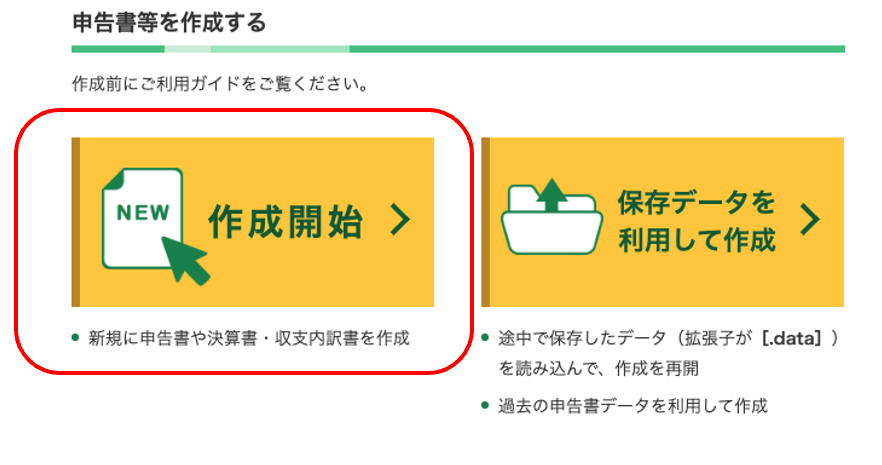
Access the tax return preparation section click "Start Preparation"

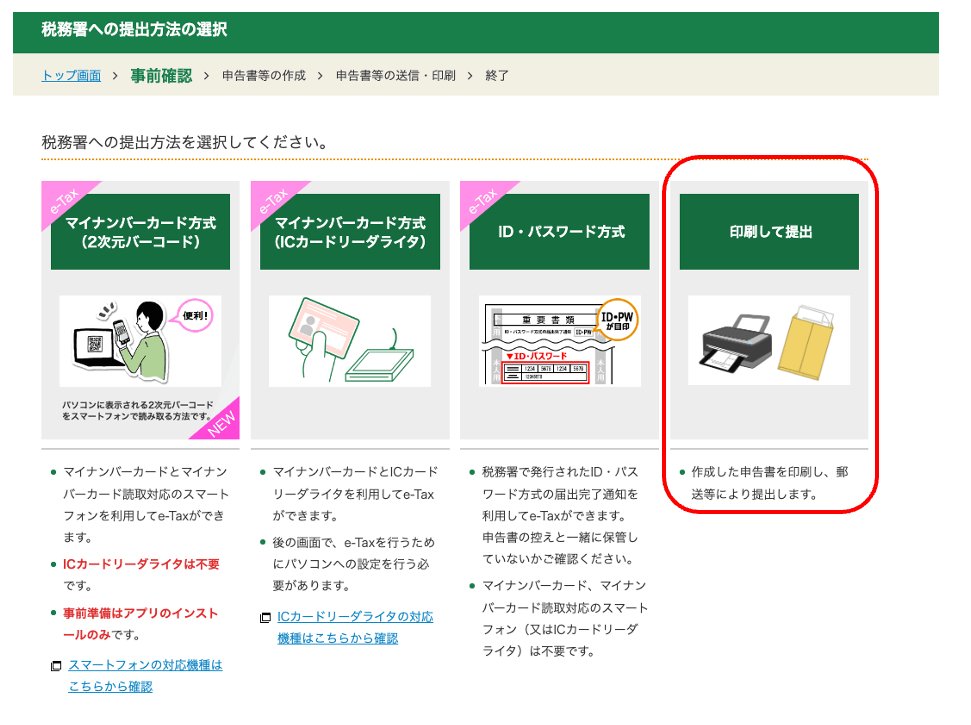
This section explains how to print and submit your tax return. Click "Print and Submit"
③ Select "Income Tax" and start creating

Select the tax return form you wish to prepare

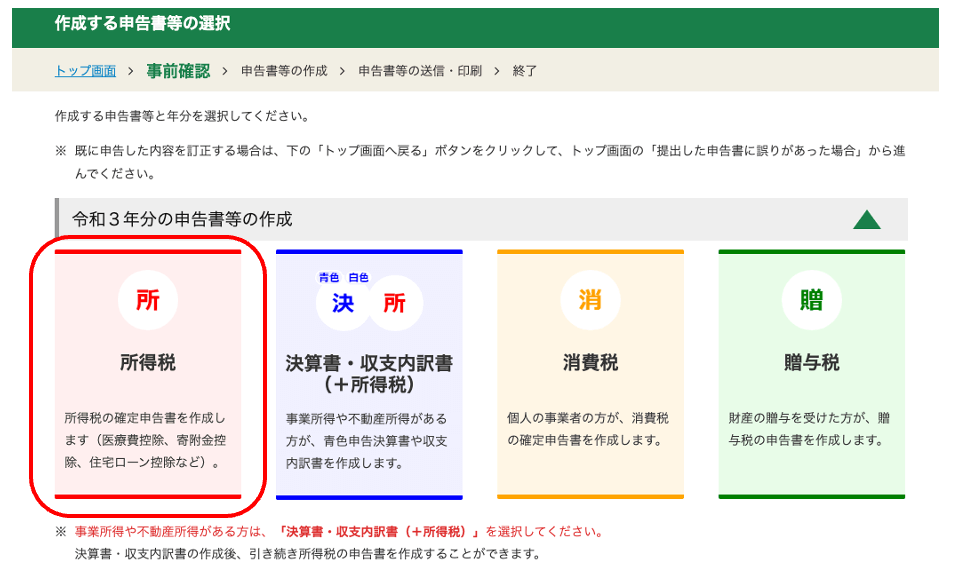
Select the year for which you will be filing your tax return, and then click "Income Tax"
Before you begin preparing your tax return, you will need to select "date of birth" and whether or not they have "income other than salary."
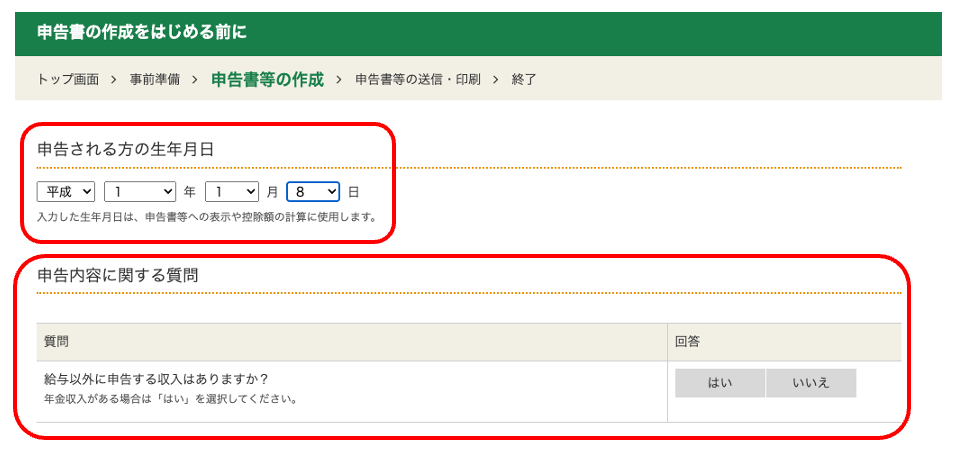
Now we'll actually begin the tax return filing process

④ Enter your salary income and other details according to the instructions on the screen

Enter your income or earnings

Please enter your income if you have any income other than salary or overseas forex trading
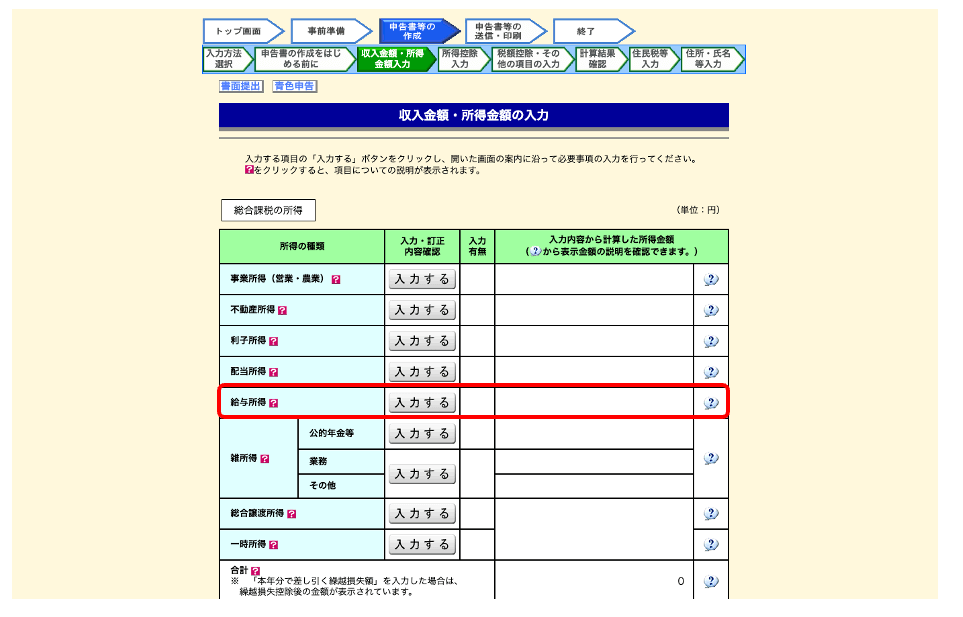
Those with salary income should enter their information based on the withholding tax statement issued by their employer
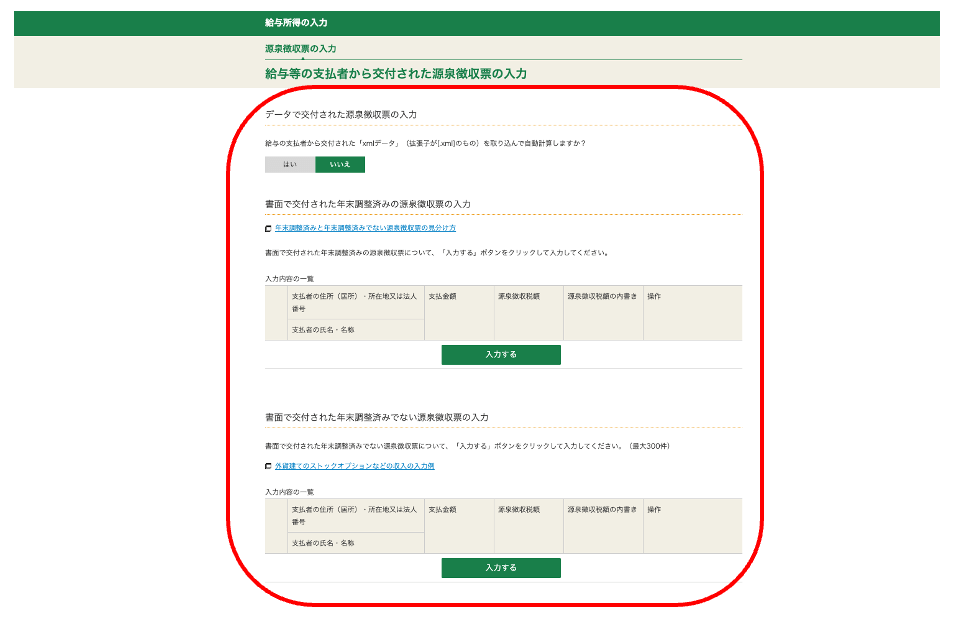
This completes the input regarding salary income, etc

<What is a specific expense deduction?>

The specific expense deduction is a system that allows you to deduct business-related expenses from your income when you personally bear those expenses

If you personally bear the costs of the following seven items, you can claim a deduction as a specific expense

  1. Commuting expenses that are normally considered necessary
  2. Transportation expenses when working away from the usual workplace
  3. Relocation expenses due to job transfer
  4. Training fees for skills and knowledge necessary for the job
  5. Costs to obtain qualifications necessary for the job
  6. Transportation costs for employees working away from home to return home
  7. Books, clothing, and entertainment expenses necessary for work

However, proof from the employer is required to claim any of the specified expense deductions

If you are eligible for the specific expense deduction, "Yes" for "Apply" and enter the information.
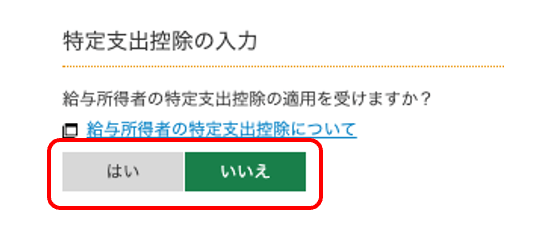
⑤ Enter the actual profits you earned from FX trading

When filing your tax return, enter any income earned from overseas forex trading, etc., in the "Miscellaneous Income" section
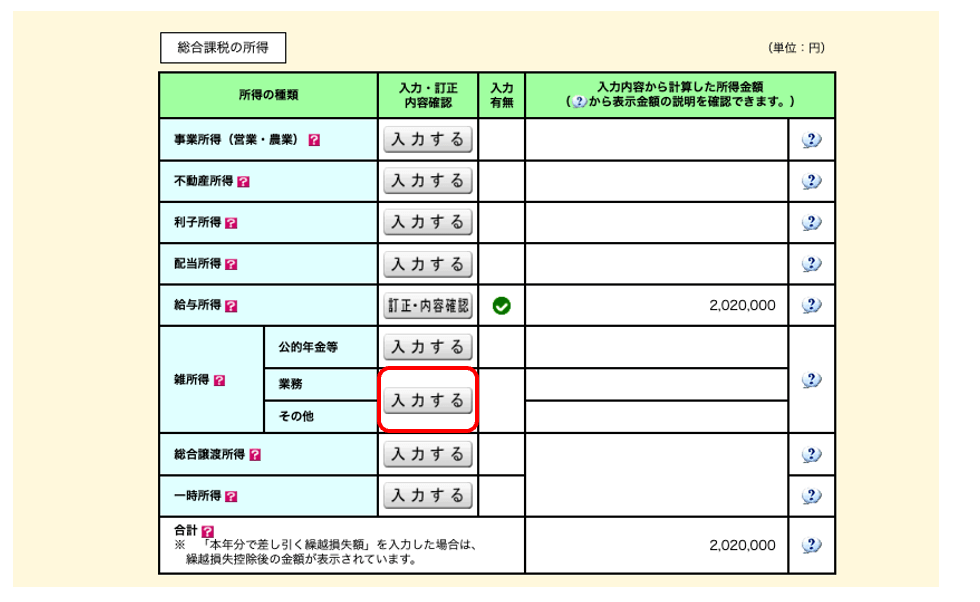
Enter your income from overseas forex trading, necessary expenses, and information about the overseas forex broker
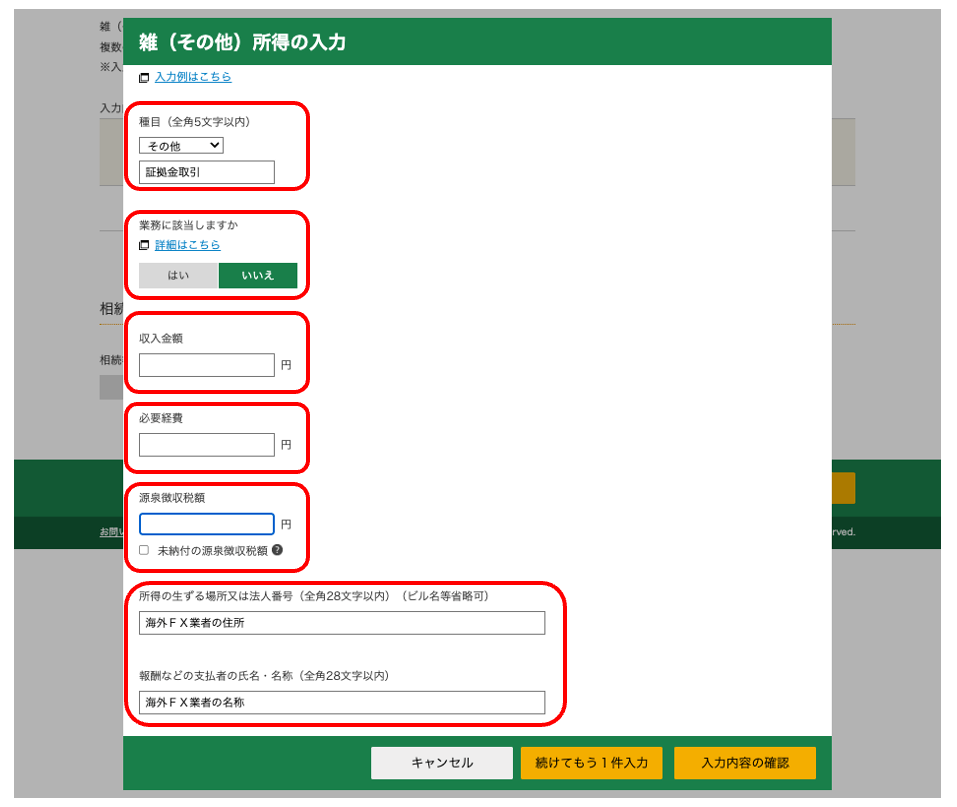
This concludes the input regarding income from overseas forex trading

Check the official website for the address of the overseas exchange

When registering your income from overseas forex trading, you will need to enter the address and name of the overseas forex broker. Please check the official website of the overseas forex broker and enter the information there

If you're unsure, please contact customer support

⑤ Enter any applicable deductions

If you are claiming various deductions such as medical expense deductions, life insurance premium deductions, or spousal deductions, please enter the applicable information

Since income deductions such as life insurance premium deductions and spousal deductions declared in your employer's year-end tax adjustment are already reflected in your withholding tax statement, you do not need to enter them here

⑥ Check the tax amount and proceed to the next step

Once you have finished entering your income deductions, the amount you need to pay will be displayed

Check the calculation results and proceed to the next step

⑦ Review the information regarding resident tax and business tax and proceed to the next step

After confirming the calculation result of the payment amount, please check the "Matters concerning resident tax and business tax."

After reviewing the content, we will proceed to the next step

<If you don't want your employer to find out about your side job, choose "pay it yourself">

In the resident tax input field, you can select the method for collecting resident tax on income other than salary and public pensions

If you choose special collection, the amount of resident tax incurred on your salary income and overseas forex trading will be notified to your employer, which could potentially reveal your side job

If you don't want your side job to be discovered, choose "pay yourself"

⑧ Enter personal information such as address and name

You will need to enter personal information such as the address and name of the person filing the tax return

This completes the input of your personal information

⑨ Print your tax return

Finally, print out your tax return form and submit it to your nearest tax office either in person or by mail

This completes the tax return filing process

If you're unsure, it's a good idea to ask a tax accountant to handle it for you

If you are unsure about how to declare your income, expenses, and deductions, it is recommended to ask a tax accountant to handle your tax return for you

By hiring a tax accountant, you can not only file the correct tax return but also expect highly effective tax-saving strategies

Furthermore, you can consult with them about any concerns you may have, such as your business performance or tax reforms, and receive advice, which can help alleviate future anxieties

However, since this will incur fees for the tax accountant, you should consider whether the benefits outweigh the costs before hiring one

Q&A regarding how to file tax returns for overseas forex trading

Here are four frequently asked questions regarding how to file your tax return for overseas forex trading

  1. What is the tax rate on overseas forex trading?
  2. Do I need to file a tax return even if I haven't withdrawn any money from my overseas forex broker?
  3. Will I get away with not paying taxes?
  4. What is the going rate for completely outsourcing tax filing to a tax accountant?

Let's check the items that interest you

Q. What is the tax rate on overseas forex trading?

Profits earned from overseas forex trading are subject to comprehensive taxation , and therefore income tax is calculated using a progressive tax system.

Progressive taxation is a system where the higher your taxable income, the higher your income tax will be. Tax rates range from 5% to 45% depending on your taxable income

Income tax table

Taxable income tax rate Deduction amount
From 1,000 yen to 1,949,000 yen 5% 0 yen
From 1,950,000 yen to 3,299,000 yen 10% 97,500 yen
From 3,300,000 yen to 6,949,000 yen 20% 427,500 yen
From 6,950,000 yen to 8,999,000 yen 23% 636,000 yen
From 9,000,000 yen to 17,999,000 yen 33% 1,536,000 yen
From 18,000,000 yen to 39,999,000 yen 40% 2,796,000 yen
Over 40,000,000 yen 45% 4,796,000 yen

Source: Income Tax Rates | National Tax Agency

Please note that the local tax on overseas forex trading is a flat rate of 10%

✓ Also frequently read

[Tax Accountant Supervised] Complete Guide to Taxes on Overseas Forex Trading | Differences in Tax Rates and Calculation Methods Compared to Domestic Forex Trading, and How to File Your Tax Return

Overseas forex trading offers the potential for large profits through high-leverage trading. However, overseas forex is subject to a "comprehensive taxation" category, meaning that taxes tend to increase as income rises. This article provides a detailed explanation of taxes on overseas forex and how to file a tax return. We also explain how to calculate taxes and the differences in taxes between overseas forex and domestic forex, so please refer to this article if you have any questions about overseas forex taxes. We believe that this article will answer all your questions regarding overseas forex taxes, so please look forward to it. Taxes are incurred when profits are made in overseas forex. Taxes are incurred in overseas forex when profits are made. And even if you make a profit in overseas forex, there are no tax loopholes. Even if you try to evade taxes, the tax office will find out, so anyone who makes a profit above a certain amount must file a tax return. Below, we will explain why tax evasion is discovered and what happens if you don't pay taxes. Are there no loopholes in overseas forex taxes? Reasons why tax evasion is discovered What happens if you don't pay taxes on overseas forex? Are there no loopholes in overseas forex taxes? Why Tax Evasion Gets Caught In conclusion, there are no loopholes when it comes to taxes on overseas forex trading. Even if you use an overseas forex broker with a base abroad, if you make a profit above a certain amount and fail to pay taxes, the tax authorities will inevitably find out about your tax evasion. This is because the Japanese tax authorities can track income generated overseas through overseas remittance reports and CRS. Overseas remittance report: A notification to the tax authorities when you deposit profits earned from overseas forex trading into a domestic account for use in Japan. CRS: A system to prevent tax evasion and tax avoidance using foreign financial institutions, etc. Also, individual tax audits are not conducted immediately, but are said to occur only once every 5 to 10 years. This is because the longer the period of tax evasion, the easier it is to collect more taxes. In other words, "no tax audit" does not mean "tax evasion hasn't been discovered." If you make a profit above a certain amount, be sure to file a tax return. https://money-charger.com/information/overseas-fx-tax-saving What happens if you don't pay taxes on overseas forex trading? If you are required to file a tax return but fail to do so, it will be considered tax evasion and you may be subject to severe penalties. Failure to declare income: Non-filing penalty tax 15% to 20% Late filing or payment: Late payment penalty 2.4% to 14.6% Heavy penalty tax 35% to 40% for gross negligence such as concealing income Late filing, insufficient documents, or concealment may result in revocation of blue return approval or reduction of special deductions If you have miscellaneous income other than overseas FX (cryptocurrency trading, affiliate income), you should combine it with your overseas FX profits and file a tax return. Taxes, tax rates, and calculation methods for overseas FX Below, we will explain the taxes, tax rates, and calculation methods for overseas FX. Taxes and tax rates for overseas FX How to calculate taxes when you earn 10 million yen from overseas FX Taxes and tax rates for overseas FX There are two types of taxes on overseas FX: "income tax" and "resident tax". Below, we will introduce the details and tax rates for each tax. ① Income Tax Income tax is a tax levied on an individual's income. The tax amount is calculated by applying the tax rate to the taxable income remaining after deducting income deductions from all income for the year. (Source: National Tax Agency | How Income Tax Works) Income is classified into eight categories, and profits from overseas forex trading fall under "miscellaneous income." Interest income Dividend income Real estate income Business income Employment income Capital gains Temporary income Miscellaneous income Overseas forex trading is subject to comprehensive taxation, so if you have other income in addition to your overseas forex profits, the income tax will be calculated by adding it all together. Comprehensive taxation is a system where the tax rate increases as your income increases, and the details are as follows. Taxable Income Tax Rate Deduction Amount From 1,000 yen to 1,949,000 yen: 5% 0 yen From 1,950,000 yen to 3,299,000 yen: 10% 97,500 yen From 3,300,000 yen to 6,949,000 yen: 20% 427,500 yen From 6,950,000 yen to 8,999,000 yen: 23% 636,000 yen From 9,000,000 yen to 17,999,000 yen: 33% 1,536,000 yen From 18,000,000 yen to 39,999,000 yen: 40% 2,796,000 yen Above 40,000,000 yen: 45% 4,796,000 yen Source: National Tax Agency | Income Tax Rates Please note that if your annual income is 24 million yen or less, you are eligible for the "basic deduction," so if your annual income is 480,000 yen or less, you do not need to file a tax return. ② Resident tax While income tax is not levied unless you make a profit above a certain amount, resident tax must be paid if you make even 1 yen in profit. The resident tax rate for overseas FX is a flat 10%. If you file a tax return, you do not need to file a resident tax return, but if you do not file a tax return and have made 1 yen or more in profit from overseas FX, you will need to file a resident tax return with your local municipality. How to calculate taxes when you earn 10 million yen with overseas FX The method for calculating taxes when you earn 10 million yen with overseas FX is as follows. (Only basic deduction applies, no necessary expenses) [Calculation formula for income tax] 10 million yen (profit) - 480,000 yen (basic deduction) = 9.52 million yen (taxable income) 9.52 million yen (taxable income) × 33% (tax rate) = 3,141,600 yen [Calculation formula for local inhabitant tax] 9.52 million yen (taxable income) × 10% (tax rate) = 952,000 yen [Calculation formula for reconstruction special income tax] 3,141,600 yen (income tax amount) × 2.1% (tax rate) = 65,973.6 yen [Total tax payable] 3,141,600 yen (income tax amount) + 952,000 yen (local inhabitant tax amount) + 65,973.6 yen (reconstruction special income tax) = 4,159,573.6 yen Differences in tax rates between overseas FX and domestic FX Below, we will explain the differences in tax rates between overseas FX and domestic FX and the break-even point. Which is cheaper in terms of taxes: overseas FX or domestic FX? The tax break point between overseas FX and domestic FX is "3.3 million yen." Differences in taxes between foreign exchange FX and cryptocurrency (Bitcoin) FX. Which is cheaper in terms of taxes: overseas FX or domestic FX? First, the tax systems for overseas FX and domestic FX are significantly different. Overseas FX Domestic FX Tax Classification Comprehensive Taxation Declaration Separate Taxation Tax Rate 5%~45% 20.315% Loss Carryforward Not Possible Possible Loss Offset Possible…

Read more →

Q. Do I need to file a tax return even if I haven't withdrawn any money from my overseas forex broker?

Taxable income that requires filing a tax return is based on realized profits and losses. Therefore, even if you haven't withdrawn funds from your overseas forex broker, if your position has been closed and a profit has been generated, you are subject to filing a tax return.

Furthermore, if the total amount of taxable gains and losses is more than 200,000 yen for salaried employees and more than 480,000 yen for non-salaried employees, a tax return must be filed

Q. Will I get away with not paying taxes?

Even if the income is taxable from overseas forex trading, if you don't file a tax return and pay taxes, the Japanese tax authorities will find out you've evaded taxes.

This is because Japanese tax authorities are supposed to be able to track income generated overseas through overseas remittance reports and the CRS (Common Reporting Standard)

A Report of Overseas Remittances is a notification form that you submit to the tax office when you deposit profits earned from overseas forex trading into a domestic account for use in Japan. The Critical Risk Management System (CRS) is a system designed to prevent tax evasion and avoidance using foreign financial institutions

If you fail to file a tax return, you will incur penalties such as a non-filing penalty tax, late payment penalty tax, and heavy penalty tax, and you will have to pay additional taxes

  • Failure to declare taxable income will result
    in a penalty tax of 15% to 20%.
  • If you file or pay taxes after the deadline,
    a late payment penalty of 2.4% to 14.6% will
  • In cases of serious negligence such as concealing income, a heavy
    penalty tax of 35% to 40% will be imposed.
  • If the filing deadline is missed, or if there are missing documents or concealment,
    the approval for blue return filing may be revoked or special deductions may be reduced.

Profits earned from overseas forex trading must also be declared to the Japanese tax authorities, so if you have made a profit, be sure to file your tax return properly

Q. What is the going rate for completely outsourcing tax filing to a tax accountant?

The typical fee for hiring a tax accountant to file your tax return is often determined based on your sales figures.

  • Sales under 5 million yen: Commission 100,000 yen
  • Sales of 5 million yen or more but less than 10 million yen: Commission of 150,000 yen
  • Sales of ¥1,000 or more, but less than ¥15,000,000: Commission of ¥200,000

By entrusting your tax filing to a tax accountant, you can reduce the amount of work involved in filing your tax return and ensure that you pay your taxes correctly

summary

This page explains how to file your tax return for overseas forex trading and how to avoid losing money on taxes

Finally, let's review the important points

  • Tax returns are generally filed between February 16th and March 15th of the following year
  • Failure to file a tax return will be considered tax evasion and will result in penalties
  • If you are a salaried employee, you need to file a tax return if your income exceeds 200,000 yen. If you are not a salaried employee, you need to file a tax return if your income exceeds 480,000 yen
  • Losses from overseas forex trading cannot be carried over to the following year
  • When an employee files their tax return, they need the withholding tax statement issued by their company

It is also possible to ask a tax accountant to handle your tax return, so if you are unsure or don't want to spend time on it, using a tax return preparation service is recommended

Be aware that incorrect tax declarations or payments may result in penalties and additional tax bills


If you're interested after reading this article

Register in 1 minute!

Get cashback now

Register now for free →

Registration takes 1 minute and has no fees