













Even if you understand that "claiming expenses" is important for tax savings in overseas forex trading, you may not know which expenses are deductible or what percentage of them can be claimed
This articleintroduce what expenses can be deducted when trading forex overseas, and the percentage of expenses that should be claimed.
Understanding how expenses are treated can lead to significant tax savings. If you're unsure which expenses qualify, please refer to this information
Conclusion | Key Points Regarding Expenses in Overseas Forex Trading
- Typical examples of expenses that can be fully deducted: trading fees, EAs/indicators, VPS, FX books, seminar participation fees (including transportation/accommodation), and tax accountant fees.
- Guidelines for allocating household expenses : 10-20% for communication costs, 5-10% for electricity, and 5-15% for rent. Ensure you can justify these percentages (based on factors like trading hours and workspace size).
- There is no upper limit on expenses, but the final decision rests with the tax office. Receipts and records must be kept for at least 5 years, and expenses unrelated to FX should not be included.
- Equipment costing approximately $625.00 or more isdepreciable. Spreads are included in profit and loss andcannot be treated as expenses.
*This article was created by the MoneyCharger editorial team in accordance with their content creation policy , based on publicly available information from the National Tax Agency (as of August 2026, and based on the system for the 2025 tax year and beyond). Since tax amounts and deductions vary depending on individual circumstances, we recommend checking the latest information from the National Tax Agency or consulting with a tax professional before filing your tax return. For precautions regarding the use of overseas FX brokers, please also check the information published by the Financial Services Agency , and for consumer troubles, please check the information published by the Consumer Affairs Agency
For information regarding taxes on overseas forex trading, please read the complete guide to overseas forex taxation
Tax rules for overseas forex trading
If you make a profit above a certain amount from overseas forex trading, you are required to file a tax return
Furthermore, the tax system differs significantly from domestic FX, including the inability to carry forward losses
The following explains in detail the rules regarding taxes on overseas forex trading
- Taxes on overseas forex trading are subject to comprehensive taxation
- Losses from overseas forex trading cannot be carried forward
- Losses from domestic FX trading cannot be offset against profits from domestic FX trading
Taxes on overseas forex trading are subject to comprehensive taxation
The taxation method for FX profits differs between overseas FX and domestic FX;overseas FX is subject to "comprehensive taxation," while domestic FX is subject to separate taxation based on declaration.
Comprehensive taxation calculates income tax by aggregating various types of income. On the other hand, separate taxation is a taxation method in which income tax is calculated separately from other income
Income subject to comprehensive taxation
- Interest income
- Dividend income
- Real estate income
- business income
- Salary income
- Capital gains
- temporary income
- Miscellaneous income
Furthermore, while the tax rate for domestic FX is a flat 20.315% including the special reconstruction income tax,overseas FX employs a progressive tax system where the tax rate increases as the amount of income increases.
Overseas forex trading can result in income tax of up to 45% (approximately 55% when combined with local tax of 10%), meaning the larger your profits, the heavier your tax burden becomes
| Taxable income | tax rate | Deduction amount |
|---|---|---|
| From approximately $6.25 to approximately $12,181 | 5% | approx. $0.00 |
| From approximately $12,188 to approximately $20,619 | 10% | approx. $609.38 |
| From approximately $20,625 to approximately $43,431 | 20% | approx. $2,672 |
| From approximately $43,438 to approximately $56,244 | 23% | approx. $3,975 |
| From approximately $56,250 to approximately $112,494 | 33% | approx. $9,600 |
| From approximately $112,500 to approximately $249,994 | 40% | approx. $17,475 |
| Approximately $250,000 or more | 45% | approx. $29,975 |
Source:National Tax Agency | Income Tax Rates
The break-even point for tax burden between overseas and domestic forex trading is approximately $30,000 in taxable income, but depending on the amount of expenses claimed, overseas forex trading may be tax-lower even above that amount. Detailed calculations are explained in the Complete Guide to Overseas Forex Taxes
Losses from overseas forex trading cannot be carried forward
While domestic FX trading allows you to carry forward losses, overseas FXtrading does not.
Loss Carryforward: A system that allows you to carry forward losses from the current year to the following year and offset them against profits. Even if you make a large profit in the following year, you can expect tax savings by offsetting it against the losses from the previous year
It's important to note that if you incur significant losses after the year ends and are unable to pay your taxes, it will be considered tax evasion, and you will be subject to heavy penalties. Therefore, if you end the year with a profit and need to file a tax return, it is recommended that you withdraw the amount of tax you owe in advance
Losses from domestic FX trading cannot be offset against profits from domestic FX trading
Overseas forex trading, which is subject to comprehensive taxation, and domestic forex trading, which is subject to separate taxation, are classified as different income categories, so profits and losses cannot be offset against each other
Therefore, even if you make a profit of approximately $6,250 in overseas forex trading and a loss of approximately $3,125 in domestic forex trading, you will still need to pay taxes on approximately $6,250
Loss offsetting: A system that allows profits and losses incurred in the same fiscal year to be offset against each other
| Overseas FX | Domestic FX | |
|---|---|---|
| Tax classification | Comprehensive taxation | Separate taxation upon declaration |
| tax rate | 5%〜45% | 20.315% |
| Loss carryforward | Not possible | Possible |
| Offsetting profits and losses | Only permissible within the same miscellaneous income category | Only permissible in futures trading, etc |
However,possible to combine and declare profits and losses that fall under the same category of miscellaneous income. Examples include profits and losses from other overseas forex brokers, cryptocurrency forex trading, and affiliate income.
When using both overseas and domestic forex trading, it's important to thoroughly understand the differences in tax rates and tax classifications
Key points to know about expenses for overseas forex trading
There are five key points to keep in mind regarding expenses for overseas forex trading:"Record any profits without fail," "The final decision on whether to approve them rests with the tax office," "Only transaction-related expenses are covered," "Expenses cannot be carried over to the following year," and "The categoriesare almost the same as for domestic forex trading."
Let's review each item to ensure you can correctly account for your expenses when filing your tax return
- If you make a profit from overseas forex trading, it's more tax-efficient to deduct it as an expense
- Whether or not to claim expenses is at your own discretion
- Only transaction-related expenses can be deducted
- Expenses cannot be carried over to the following year
- The items that can be claimed as expenses are almost the same as those for domestic FX trading
If you make a profit from overseas forex trading, it's more tax-efficient to deduct it as an expense
While taxes are levied on profits exceeding a certain amount from overseas forex trading, claiming expenses when filing your tax return can be highly effective in reducing your tax burden
The reason is that while domestic FX trading has a flat tax rate of 20.315%, overseas FX trading employs a "progressive tax" system where the tax rate increases as profits increase
If you have few expense items, the amount of tax savings will be minimal, but themore expenses you claim, the more you can reduce your taxes.
While the specific items that qualify as deductible expenses are not publicly disclosed, you can expect tax savings by including all the expenses listed in the following section
Whether or not to claim expenses is at your own discretion
Many people understand that "transaction fees" and "indicator costs" related to FX trading can be deducted as necessary expenses, but it is also possible to partially claim expenses such as electricity bills and rent
However,whether all expenses are approved is at the discretion of the tax office, and which expense categories are approvedis not publicly disclosed.
Therefore, it is up to your own judgment to decide which expenses to include and to what extent. If you have any questions about expenses, it would be wise to consult with a tax accountant or other professional
Only transaction-related expenses can be deducted
When filing your tax return for overseas forex trading, only transaction-related expenses can be deducted
For example, the following types of expenses are often approved by the tax authorities
- Transaction fees
- Indicator costs
- Books related to FX
However, expenses unrelated to FX, such as transportation costs, book expenses, and food expenses, are not deductible. Even if you try to claim unrelated expenses thinking "I won't get caught," investigators will scrutinize not only the amount but also the itemized details, so you will definitely get caught
without proper considerationcan result in severe penalties, so it's important to implement tax-saving measures in accordance with the law.
Expenses cannot be carried over to the following year
You cannot carry over expenses to the following year and use that to reduce your taxes, simply because "profits were low this year."
Expenses related to FX trading, such as books, paid for during the year must be recorded as expenses for that year. As an exception, expenses exceeding approximately $625.00 must be depreciated and spread over several years
The items that can be claimed as expenses are almost the same as those for domestic FX trading
The criteria for what constitutes a deductible expensethe same for both overseas and domestic forex trading: "expenses related to trading." The expense items and household expense allocation ratios introduced in this article can be used in almost the same way when filing tax returns for domestic forex trading.
The difference lies not in the expenses themselves, but in the method of calculating taxes. For overseas FX trading, you enter your income and necessary expenses in the "miscellaneous income" column under comprehensive taxation, while for domestic FX trading, you enter them in the "miscellaneous income, etc., related to futures transactions" column under separate taxation
Furthermore, with overseas forex trading, which is subject to progressive taxation, the tax rate increases with higher income. Therefore,even with the same amount of expenses, the tax-saving effect is greater for those with a higher tax rate.
What expenses can be deducted when trading overseas forex?
From here, we'll introduce what you can deduct as expenses when trading overseas forex. First, let's look at an overview diagram

This chapter will explain the items marked "Full Amount ○" one by one. In principle, all of these items can be fully expensed
- Transaction fees
- Cost of purchasing a PC or smartphone
- Consumables/equipment fees
- Books on overseas forex trading
- Seminar participation fees, transportation costs, and accommodation costs related to FX
- VPS contract costs for automated trading
- Purchase cost of EAs and indicators
- Fees for hiring a tax accountant
- Entertainment expenses
- Interest on debt
Transaction fees
Transaction fees incurred when placing an order can be recorded as expenses
alsoeligible expenses. However, spreads are included in profit and loss and therefore cannot be claimed as expenses.
Here's how to check trading fees in MT4 and MT5:
- Open the MT4/MT5 terminal screen
- Select the "Account History" tab and right-click
- Click "Display Column" and select "Fees" to see the fees for each transaction
Cost of purchasing a PC or smartphone
The cost of purchasing a computer or smartphone, as well as other items such as tablets and monitors, can be claimed as necessary business expenses
However, when accounting for the cost of purchasing a computer or smartphone,if it is used for purposes other than business transactions, you must calculate the usage percentage and declare it.
[Example]If you have a computer that costs approximately $562.50 and your trading time per day is 3 hours, then
approximately $562.50 × (3 hours ÷ 24 hours) = approximately $68.75
Furthermore, if the purchase cost of a computer or smartphone exceeds approximately $625.00, the expense must be spread over multiple years (depreciation)
| Cost of purchasing a PC or smartphone | Depreciation rate | Depreciation period |
|---|---|---|
| Approximately less than $625.00 | 100% | Lump-sum accounting |
| Approximately $625.00 or more, and less than approximately $1,250 | 33.3% | Accounted over three years |
| Approximately $1,250 or more | 25% | Accounted over four years |
Consumables/equipment fees
The following consumables can also be recorded as expenses:
- Notebook
- pen
- chair
- desk
- ink
- sticky note
- printer
Even if each individual expense is small, the total amount can add up over a year.Keep receipts for supplies and equipment instead of throwing them away.
Furthermore, in the event of a tax audit, you may be asked to submit these records to verify whether you have actually kept proper transaction records
Books on overseas forex trading
In FX trading, daily study and information gathering are essential
You can also claim expenses such as books, newspapers, and email newsletters related to FX as business expenses
However, please note that general newspapers unrelated to the transaction are not eligible as expenses
If the document contains information related to FX trading, it's a good idea to keep it as evidence
Seminar participation fees, transportation costs, and accommodation costs related to FX
If you attend a seminar on FX trading, you can claim not only the participation fee but also transportation and accommodation expenses as business expenses
When staying at a hotel, be sure to get a receipt. Fortransportation expenses (Suica/PASMO), you can print out your usage history at the station.However, please note that the number of entries that can be printed varies depending on the type of electronic money.
| Types of electronic money | Number of printable items | Printable period |
|---|---|---|
| Suica | 100 items | 26 weeks |
| PASMO | 20 items | 26 weeks |
| ICOCA | 20 items | 26 weeks |
VPS contract costs for automated trading
Many people likely subscribe to a VPS (Virtual Private Server) to run automated trading 24 hours a day, 365 days a year
Contract fees with server companies, both domestic and international, are deductible expenses.Monthly usage fees can also be included.
However, some overseas forex brokers offer free VPS access if certain conditions are met, so be sure to check with your chosen broker before signing a contract to see if they offer free VPS
Purchase cost of EAs and indicators
The cost of purchasing MT4/MT5 indicators and automated trading software is also eligible as a necessary expense
MT4 and MT5 indicators can be purchased using MQL5, andif you want to claim them as expenses, saving the purchase history screen will allow you to submit it as evidence in the event of a tax audit.
Fees for hiring a tax accountant
Expenses such as consultations regarding taxes and fees for filing tax returns can also be claimed as business expenses
Additionally, transportation costs and telephone charges incurred when visiting the office for a free consultation are also deductible expenses
Since hiring a tax accountant to file your tax return typically costs around $312.50 to $625.00, claiming this service can result in significant tax savings
While preparing your tax return yourself can save you money, it's safer to hire a tax accountant and have them handle the expenses, ensuring accuracy
Entertainment expenses
, such as information exchange meetings with fellow FX traders or social gatherings after seminars,may be deductible as entertainment expenses.
However, meals with friends unrelated to FX or meetings that are merely nominal are not deductible expenses. Entertainment expenses are a category where explanations of their relevance to trading are particularly likely to be required, so keep a record of "when, with whom, and for what purpose" and keep the receipts. If you are unsure, consult a tax accountant
Interest on debt
If you use a loan from a consumer finance company as collateral,you can deduct the interest paid on the loan as an expense.
However, since taking out loans to trade FX is extremely risky, it is recommended to trade only within the limits of your surplus funds
What percentage of expenses can be claimed as household expenses when trading overseas forex?
Some expenses that can be deducted in overseas forex trading can only be claimed in part, not in full
This section outlines the categories and percentages for which household expenses can be allocated. The following are guidelines:

PC and smartphone communication costs: 10-20%
You can claim approximately 10-20% of your computer and smartphone communication expenses as business expenses
[Example]If you use your smartphone for 6 hours for personal use and 2 hours for business use per day, and your
total daily usage time is 8 hours, then 2/8 × 100% = 25%.
You can claim 25% of your communication expenses as a business expense.
The calculation method for PC communication costs is the same. However, please note that the cost of the smartphone itself is not included in communication costs and should be treated separately as a purchase cost . Only the monthly communication fee is included
Electricity costs: 5-10%
Computer usage time (and the associated electricity costs) is also highly likely to be partially recognized as a business expense
Aim for a percentage of around 5-10% andrecord and report your computer usage time.
Since the amount of electricity used for transactions is small compared to the total amount of electricity used in the house, be aware that if it exceeds 20%, you may be subject to a tax audit
Rent: 5-15%
When claiming rent as a business expense, a good guideline is to aim for 5-15%
There are two methods for calculating the ratio: one is to calculate it based on FX trading hours , and the other is to calculate it based on the ratio of the workspace area
If calculating based on trading hours, assuming a trading day of 3 hours, the percentage is calculated as follows
3 hours ÷ 24 hours × 100 = 12.5%
If we calculate based on the area of the workspace, assuming the workspace occupies 20% of the total house area and the rent is approximately $625.00, the calculation would be as follows:
approx. $625.00 × 20% = approx. $125.00 ← Can be claimed as an expense
Rent for an entire house that you use on a regular basis cannot be claimed as a business expense. However, if you use the entire premises as an office for FX trading, you can claim the entire rent as a business expense
Furthermore, if you own your home,the property tax paid four times a year is also deductible as an expense. The calculation of the percentage is the same as for rental properties, calculated from the area of the room used for FX trading.
Tax differences based on expense amounts
Overseas forex trading employs a progressive tax system, where the tax rate increases as your income rises
The income tax rate is up to 45%, and the local tax on overseas forex trading is a flat 10%, so you could end up paying up to 55% in taxes
| Taxable income | tax rate | Deduction amount |
| From approximately $6.25 to approximately $12,181 | 5% | approx. $0.00 |
| From approximately $12,188 to approximately $20,619 | 10% | approx. $609.38 |
| From approximately $20,625 to approximately $43,431 | 20% | approx. $2,672 |
| From approximately $43,438 to approximately $56,244 | 23% | approx. $3,975 |
| From approximately $56,250 to approximately $112,494 | 33% | approx. $9,600 |
| From approximately $112,500 to approximately $249,994 | 40% | approx. $17,475 |
| Approximately $250,000 or more | 45% | approx. $29,975 |
Below,assuming an annual income of approximately $31,250 (income from overseas forex trading only), we will calculate and present the differences in tax amounts based on various necessary expenses.
*The tax rate of 20% from the tax rate table + a quick calculation deduction of approximately $2,672 is applied. Income deductions are limited to the basic deduction only (income tax approximately $3,938, local tax approximately $2,688 / for fiscal years 2025 and 2026), and the flat-rate portion of local tax and rounding of amounts less than approximately $0.63 are omitted for this approximation (as of August 2026 -National Tax Agency | Basic Deduction).
Assuming an income of approximately $31,250 and necessary expenses of approximately $625.00
If your annual income is approximately $31,250,to an income tax rate of 20% (with a quick deduction) + local taxes of 10% + special reconstruction income taxof 2.1%.
[Income Tax Calculation Formula]
approx. $31,250 (Annual Income) - approx. $3,938 (Basic Deduction) - approx. $625.00 (Necessary Expenses) = approx. $26,688 (Taxable Income)
approx. $26,688 × 20% - approx. $2,672 (Quick Deduction) = approx. $2,666
[Calculation formula for local tax]
approx. $31,250 - approx. $2,688 (basic deduction) - approx. $625.00 (necessary expenses) = approx. $27,938
approx. $27,938 × 10% = approx. $2,794
[Calculation formula for the special reconstruction income tax]
approx. $2,666 (income tax amount) × 2.1% = approx. $55.98
[Total tax payment]
approx. $2,666 (income tax) + approx. $2,794 (resident tax) + approx. $55.98 (special reconstruction income tax) = approx. approx. $5,513
Assuming an income of approximately $31,250 and necessary expenses of approximately $1,875
[Income Tax Calculation Formula]
approx. $31,250 (Annual Income) - approx. $3,938 (Basic Deduction) - approx. $1,875 (Necessary Expenses) = approx. $25,438 (Taxable Income)
approx. $25,438 × 20% - approx. $2,672 (Quick Deduction) = approx. $2,416
[Calculation formula for local tax]
approx. $31,250 - approx. $2,688 (basic deduction) - approx. $1,875 (necessary expenses) = approx. $26,688
approx. $26,688 × 10% = approx. $2,669
[Calculation formula for the special reconstruction income tax]
approx. $2,416 (income tax amount) × 2.1% = approx. $50.73
[Total tax payment]
approx. $2,416 (income tax) + approx. $2,669 (resident tax) + approx. $50.73 (special reconstruction income tax) = approx. approx. $5,131
Assuming an income of approximately $31,250 and necessary expenses of approximately $3,125
[Income Tax Calculation Formula]
approx. $31,250 (Annual Income) - approx. $3,938 (Basic Deduction) - approx. $3,125 (Necessary Expenses) = approx. $24,188 (Taxable Income)
approx. $24,188 × 20% - approx. $2,672 (Quick Deduction) = approx. $2,166
[Calculation formula for local tax]
approx. $31,250 - approx. $2,688 (basic deduction) - approx. $3,125 (necessary expenses) = approx. $25,438
approx. $25,438 × 10% = approx. $2,544
[Calculation formula for the special reconstruction income tax]
approx. $2,166 (income tax amount) × 2.1% = approx. $45.48
[Total tax payment]
approx. $2,166 (income tax) + approx. $2,544 (resident tax) + approx. $45.48 (special reconstruction income tax) = approx. approx. $4,750
With expenses of approximately $625.00 and approximately $3,125, there is a difference of approximately $762.50 in the amount of tax payable . In this example (in the 20% tax rate bracket), for every approximately $62.50 increase in expenses, taxes will be reduced by approximately $18.75 . The tax-saving effect of approximately $0.01 becomes greater for those with higher tax rates, so be sure to check that you haven't missed any expenses.
Points to note when claiming expenses in overseas forex trading
This section will explain important points to keep in mind when claiming expenses on your tax return
To ensure you file your tax return correctly, make sure you understand the following points
- In some cases, expenses may not be approved
- High expenses must be depreciated
- Keep receipts and invoices for at least 5 years
- Spreads are not eligible for expense deductions
- If expenses are high relative to profits, it may raise suspicions of tax evasion
In some cases, expenses may not be approved
While individuals are free to decide which expenses to include and how much they qualify as expenses, the final decision on whether or not to recognize them rests with the tax office
The criteria for determining whether an expense is related to FX trading and whether the percentage is reasonable will be used, and in some cases, the expense may not be approved.
Be aware that including expenses unrelated to FX trading, or fully deducting expenses such as rent (which can be partially deducted), could trigger a tax audit
High expenses must be depreciated
Expenses exceeding approximately $625.00, such as the cost of purchasing a smartphone or computer, must be depreciated
Depreciation is the process of allocating the amount spent on acquiring a depreciable asset as a necessary expense for each year using a specific method.
(Source:National Tax Agency | Overview of Depreciation)
The depreciation period varies depending on the expense;if it is approximately $1,250 or more, it must be expensed over four years.
| Cost of purchasing a PC or smartphone | Depreciation rate | Depreciation period |
|---|---|---|
| Approximately less than $625.00 | 100% | Lump-sum accounting |
| Approximately $625.00 or more, and less than approximately $1,250 | 33.3% | Accounted over three years |
| Approximately $1,250 or more | 25% | Accounted over four years |
Therefore, even if you purchase a smartphone or computer costing approximately $625.00 or more at the end of the year in the hope of tax savings, you are unlikely to gain significant benefits
Keep receipts and invoices for at least 5 years
Receipts and invoicesmust be kept as evidence for a minimum of five years. (Seven years for those filing blue-form tax returns.)
In addition, the following documents have also been accepted as evidence
- Bank account transfer statement
- Credit card statement
- Screenshots on smartphones and computers
Even if you purchase indicators online or subscribe to a VPS, saving the details on your computer will allow you to submit them as evidence if a tax audit occurs
As a point of caution, when storing receipts or invoices, simply keeping them as they are may not provide sufficient information. Therefore, be sure to check that the following information is clearly stated
- Payment date
- Payment amount
- address
- Proviso
Furthermore,if the requirements are met, it is possible to store supporting documents such as receipts as electronic data(Electronic Bookkeeping Law).
For further details , please visit the " Special Site for the Electronic Bookkeeping System " on the National Tax Agency's website
Spreads are not eligible for expense deductions
While "transaction fees" incurred when placing a trade order are recognized as expenses, spreads are not
because the spread is included in the buying and selling rate and is not considered a commission.
Other fees that qualify as expenses include deposit fees, withdrawal fees, and account maintenance fees
Please be careful, as including the spread as an expense will result in double counting
If expenses are high relative to profits, it may raise suspicions of tax evasion
If expenses are excessively high relative to profits, it may raise suspicions of fraud and lead to a tax audit
In some cases, this could be considered tax evasion, and severe penalties could be imposed
While there is no upper limit on expenses,you should account for expenses in accordance with the law, within the limits of being able to clearly present evidence.
How to account for necessary expenses in overseas forex trading
To claim necessary expenses for overseas forex trading, you prepare your tax return using the National Tax Agency's "Tax Return Preparation Corner" and enter your income and necessary expenses in the miscellaneous income section
While the method for submitting to the tax office is described under "Print and submit," those who possess a My Number Card will find the "My Number Card method" more convenient
① Access the National Tax Agency's tax return preparation page
I will prepare the necessary documents for filing your tax return
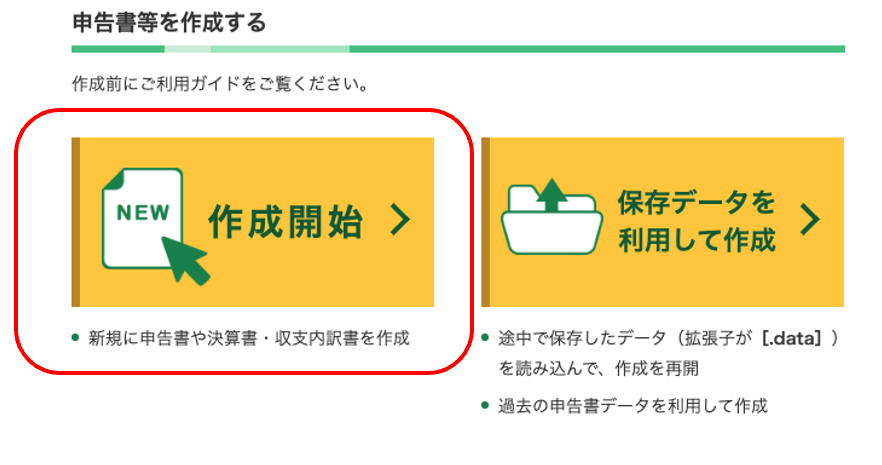
Access the tax return preparation section and click "Start Preparation"
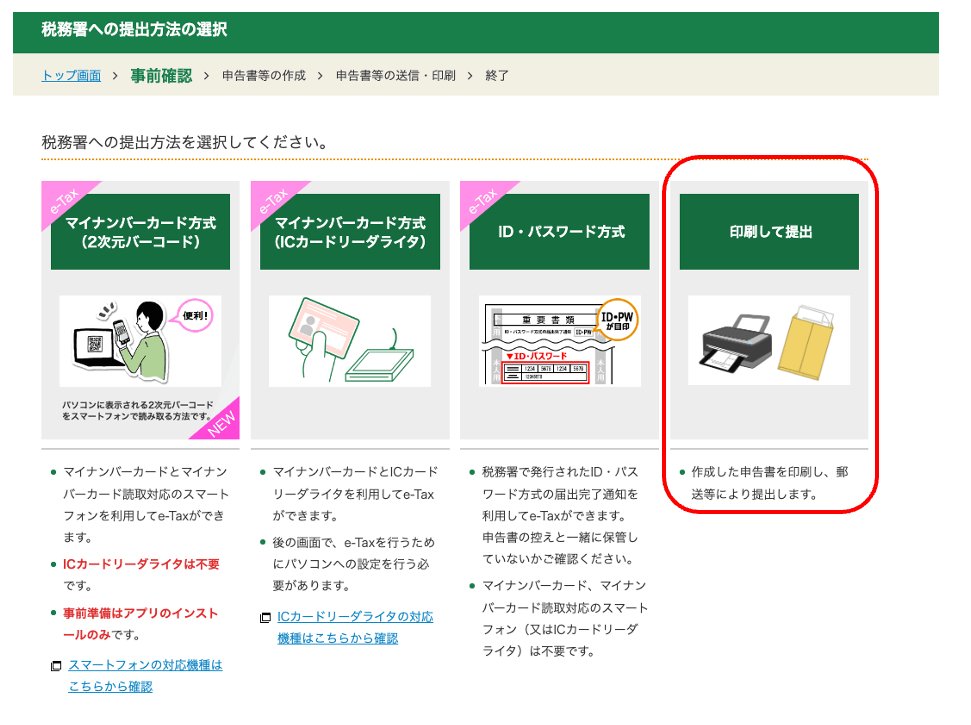
This section explains how to print and submit your tax return. Click "Print and Submit"
If you have a My Number Card, we recommend the "My Number Method," which allows you to complete the process entirely on your smartphone. Please note that the screen display may change, so please follow the latest instructions in the creation section when actually performing the operation
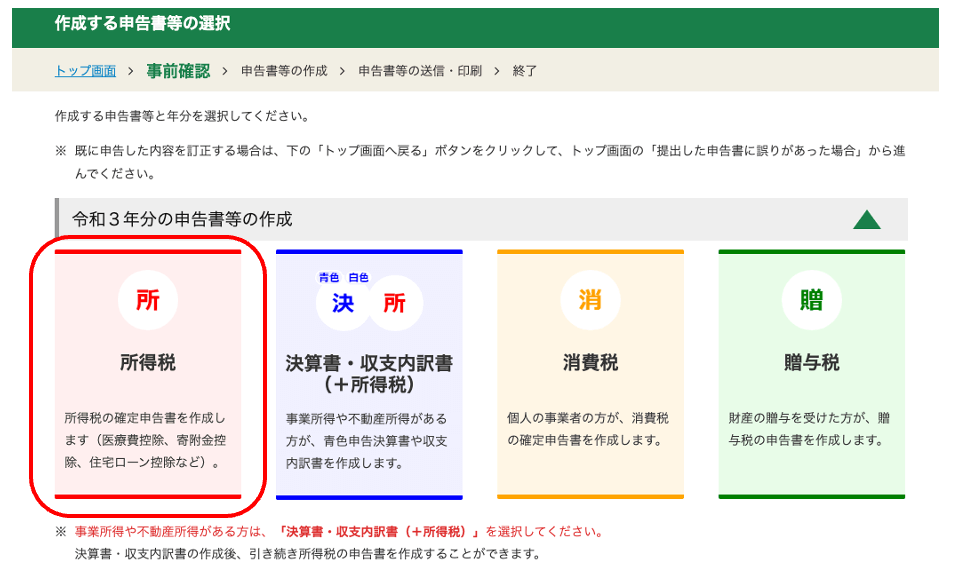
② Select "Income Tax" and start creating
Select the tax return form you wish to prepare
Select the year for which you will be filing your tax return, and then click "Income Tax"
Before you begin preparing your tax return, you will need to select the person filing the return's "date of birth" and whether or not they have "income other than salary."
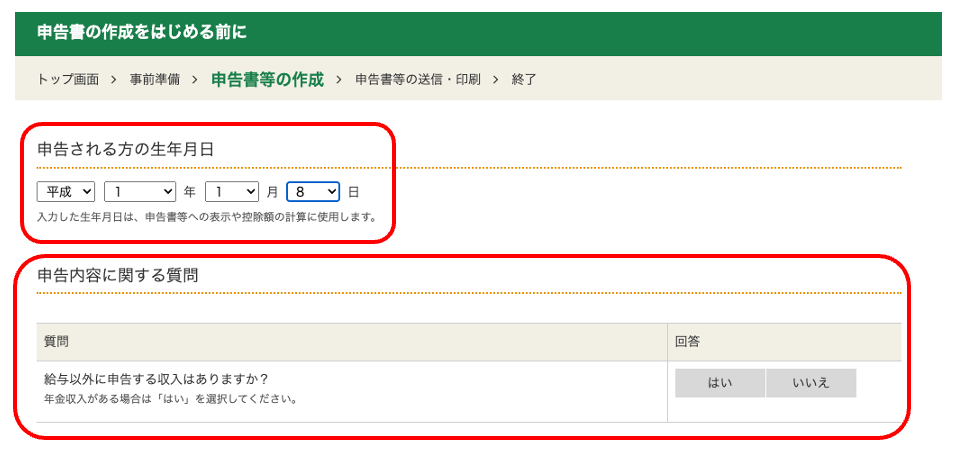
Now we'll begin the actual tax return process
③ Enter your salary income and other details according to the instructions on the screen
Enter your income or earnings
Please enter your income if you have any income other than salary or overseas forex trading
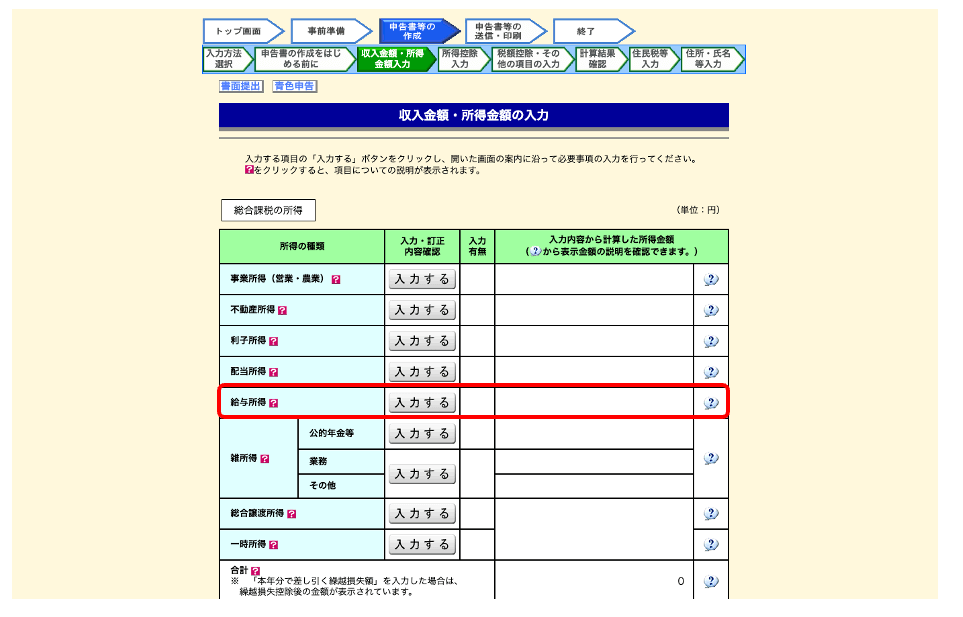
Those with salary income should enter their information based on the withholding tax statement issued by their employer
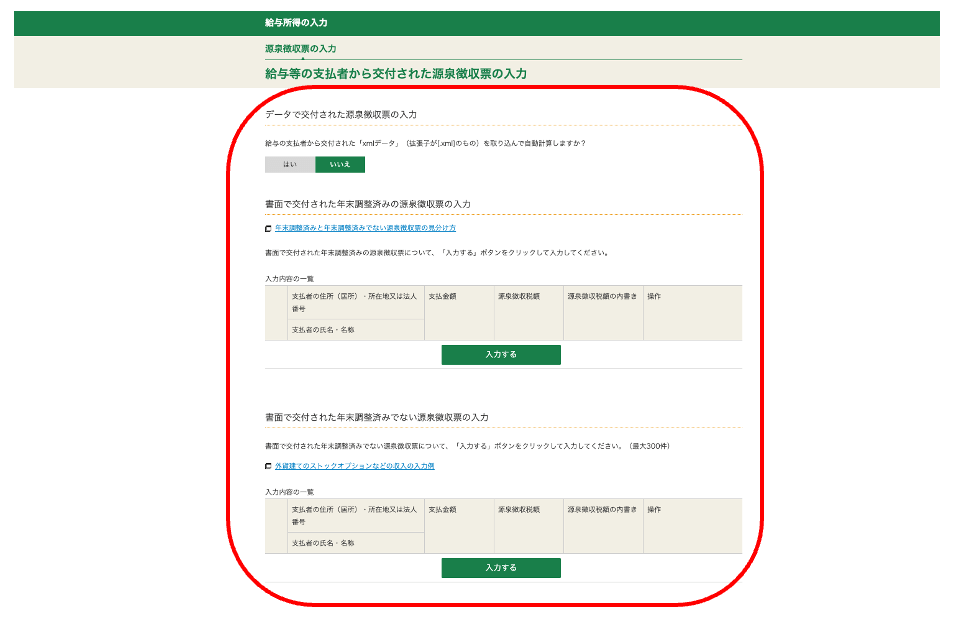
This completes the input regarding salary income, etc
If you are eligible for the specific expense deduction, select "Yes" for "Apply" and enter the information.
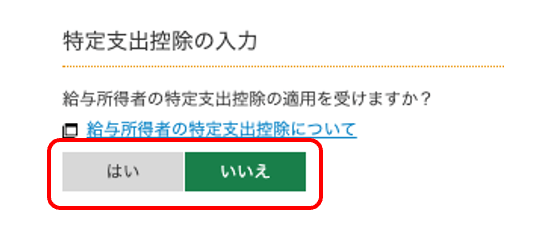
The specific expense deduction is a system that allows you to deduct business-related expenses from your income when you personally bear those expenses
If you incur personal expenses for the following seven items, you can claim a deduction as a specific expense
- Commuting expenses that are normally considered necessary
- Transportation expenses when working away from the usual workplace
- Relocation expenses due to job transfer
- Training fees for skills and knowledge necessary for the job
- Costs to obtain qualifications necessary for the job
- Transportation costs for employees working away from home to return home
- Books, clothing, and entertainment expenses necessary for work
However, proof from the employer is required to claim any of the specified expense deductions
④ Enter the actual profits you earned from FX trading
When filing your tax return, enter any income earned from overseas forex trading, etc., in the "Miscellaneous Income" section
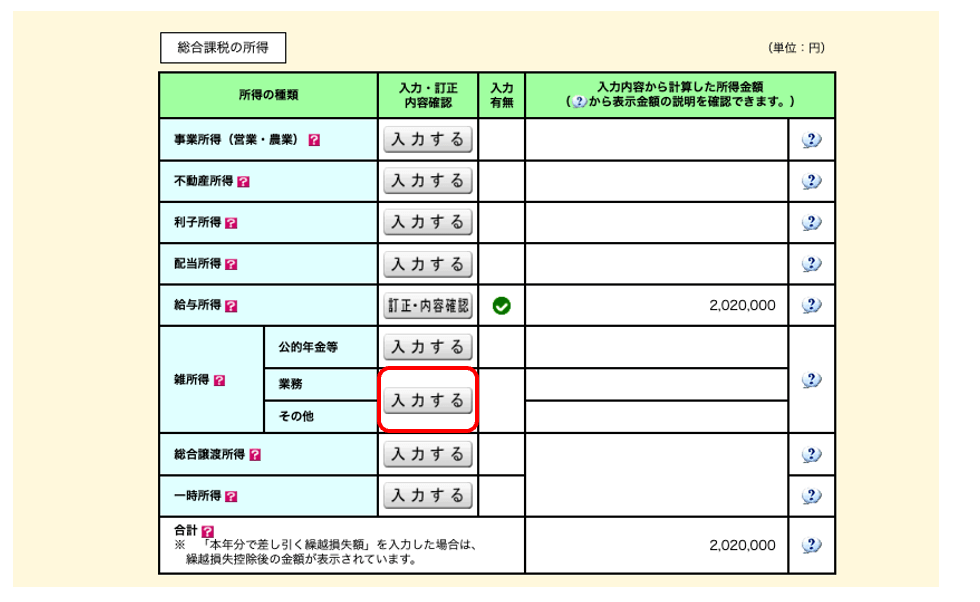
Enter your income from overseas forex trading, necessary expenses, and information about the overseas forex broker
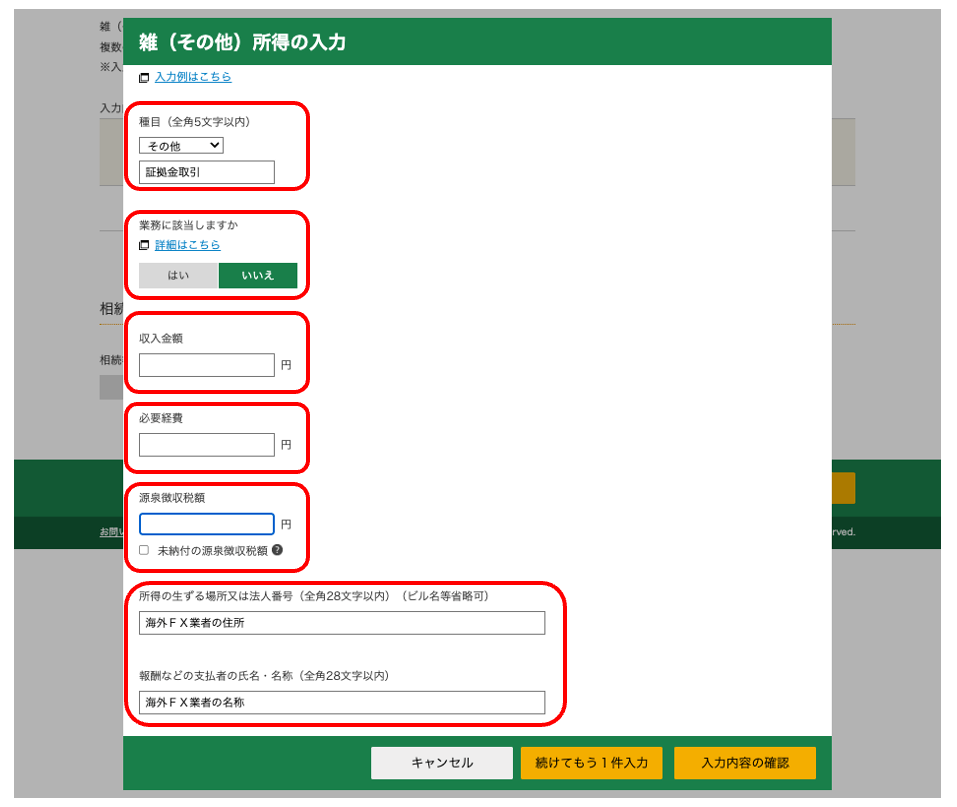
This concludes the input regarding income from overseas forex trading
When registering your income from overseas forex trading, you will need to enter the address and name of the overseas forex broker. Please check the overseas forex broker's official website and enter the information there. If you are unsure, please contact customer support
For detailed instructions on filing your tax returnthe "Complete Guide to Overseas Forex Taxes," which explains the process thoroughly.
If you want to reduce your taxes with overseas forex trading, incorporating your business is one option
While it's important to "accurately record all expenses" when it comes to tax-saving strategies for overseas forex trading, those with high annual incomes may also consider "incorporating" their business, which can offer even greater tax benefits
While the income tax rate for overseas forex trading is a progressive tax ranging from 5% to 45%,if you incorporate your business, the corporate tax ratewill be a flat 23.2%.
If your income is low, there's no problem, but as your income increases, your income tax will become higher than your corporate tax
Below, we will explain the advantages of incorporating your business and the break-even point at which you should consider incorporating
Incorporating your business increases the number of expenses you can deduct
Incorporating your overseas forex trading business increases the number of deductible expenses, leading to greater tax savings
The following items can be claimed as expenses once you incorporate your business:
- Executive compensation
- rent
- Utility expenses
- Retirement allowance
- Life insurance premiums
Furthermore, incorporating your business will increase the number of expense categories you can cover, and you will also gain the following benefits:
- Tax burden reduction (a flat rate of 23.2%)
- You can join the Employees' Pension Insurance
- Losses can be carried forward for up to 10 years
- It is possible to offset profits and losses with other businesses
In addition to significant tax benefits, the trading conditions for FX are almost the same as for individual accounts, allowing you to trade using your usual methods.The only major difference between a corporate account and an individual accountis the "tax system," so incorporating might be a good option for those with high annual profits.
The break-even point for incorporation is "annual income of approximately $56,250"
The break-even point for incorporating an overseas forex trading business is an annual income of approximately $56,250
| Taxable income | tax rate | Deduction amount |
| From approximately $6.25 to approximately $12,181 | 5% | approx. $0.00 |
| From approximately $12,188 to approximately $20,619 | 10% | approx. $609.38 |
| From approximately $20,625 to approximately $43,431 | 20% | approx. $2,672 |
| From approximately $43,438 to approximately $56,244 | 23% | approx. $3,975 |
| From approximately $56,250 to approximately $112,494 | 33% | approx. $9,600 |
| From approximately $112,500 to approximately $249,994 | 40% | approx. $17,475 |
| Approximately $250,000 or more | 45% | approx. $29,975 |
The table above shows the income tax rates for individual accounts. For income between approximately $43,438 and approximately $56,250, the tax rate is 23%, which is lower than the corporate tax rate of 23.2%
Furthermore, since the tax rate becomes 33% once your income exceeds approximately $56,250, incorporating your business will help reduce your tax burden
However, if you find it difficult to consistently generate profits every year, incorporating your business may actually result in higher tax rates. Furthermore,there are ongoing maintenance costs after incorporation. Therefore, it's important to understand the advantages and disadvantages before deciding whether or not to incorporate.
For those who prioritize tax benefits, using "domestic FX" is another option, as it offers a flat tax rate of 20.315% under the separate taxation system (15% income tax, 0.315% reconstruction special income tax, and 5% local inhabitant tax)
Frequently Asked Questions about Expenses for Overseas Forex Trading
Is there a limit to the expenses for overseas forex trading?
There is no upper limit on the expenses for overseas forex trading
However, if you include items unrelated to FX as expenses, or if the amount of expenses claimed relative to your profits is clearly high, you may be subject to a tax audit, so be sure to file your taxes correctly in accordance with the law
Where can I go for advice if I'm unsure whether an expense is deductible?
If you have any questions about expenses, such as whether an expense is deductible, here's where you can seek advice:
- National Tax Hotline
- Tax accountant
Additionally,you can consult through the "Tax Consultation Chatbot" or "Tax Answer" on the National Tax Agency's official website.
Filing your tax return without a clear understanding of your financial situation could potentially be considered tax evasion, so if you have any questions, consult a professional
Can a computer be claimed as a business expense for FX trading?
It is possible to claim the cost of a computer as a business expense for FX trading .
However, if you purchase a computer costing approximately $625.00 or more, you must spread the cost over several years (depreciation)
Also, when claiming communication expenses as business expenses, be sure to calculate the usage percentage and declare it accordingly
Are meal expenses included in FX trading expenses?
It is possible to claim the cost of meals eaten while attending an FX seminar as a business expense
However,expenses unrelated to FX, such as dining out or the cost of everyday groceries, are not deductible.
What should I do if I end up with a loss after deducting expenses from overseas forex trading?
Even if you make a profit from overseas forex trading, if you end up with a loss after deducting expenses,you do not need to file a tax return.
However, keep in mind that if your income after deducting necessary expenses is even approximately $0.01, you will need to file a local tax return
Can I freely decide the percentage of expenses?
There are no clear standards for the percentage of expenses; you are free to decide it yourself
However, if the amount of expenses claimed is clearly too high, you may be subject to a tax audit. During a tax audit, not only the amount but also the purpose of use and supporting documents will be examined in detail, so please record your expenses correctly and avoid tax evasion
What expenses related to overseas forex trading cannot be deducted?
Expenses that are not recognized as deductible for overseas forex tradingthose "unrelated to forex trading.
While expenses such as books, seminars, and trading fees related to FX can be claimed as business expenses, expenses such as meals with friends or full rent are not allowed
Furthermore, the "spread," which is often mistaken for a transaction fee , is included in the buy/sell rate at the time of the transaction and is therefore not considered an expense.
If expenses are excessively high relative to profits, it may raise suspicions of fraud and lead to a tax audit. Therefore, be sure to properly account for expenses in accordance with the law
What happens to taxes and expenses if I receive a cashback?
Cash received through cashback services like MoneyChatmay be treated as taxable income separate from FX profits.Those who receive large amounts should be careful not to fail to declare them.
For details on the taxes on cashback, please refer to our article explaining the taxes and tax filing for FX cashback . Note that cashback is not a mechanism to increase expenses, but rather a mechanism to recover the transaction costs themselves and increase net income , so it is effective to use it in conjunction with expense accounting.
Tax calculations and simulations for salaried employees based on annual income are explained in detail in our article on taxes for overseas FX trading for salaried workers
summary
This concludes our discussion of the costs associated with overseas forex trading
Finally, let's review the important points
- Overseas forex trading is subject to progressive taxation, meaning the higher your profits, the higher your tax rate
- Since losses cannot be carried forward and can only be offset against other miscellaneous income, you can expect tax savings by meticulously recording all expenses
- Expenses related to FX, including book costs, seminar fees, and trading fees, are fully deductible
- Rent and communication expenses can be partially accounted for based on usage
- There is no upper limit on the amount of expenses that can be claimed, and the percentage can be freely determined, but the final decision rests with the tax office
- Receipts and invoices should be kept as evidence for at least 5 years
- If your annual profit is approximately $56,250 or more, incorporating your business will result in greater tax savings
If you mistakenly double-count expenses or include expenses unrelated to FX trading, you may be subject to a tax audit, and in the worst-case scenario, you could face severe penalties for "tax evasion."
Always account for expenses in accordance with the law, and if you have any questions, consult a tax accountant or other professional
In addition to expense reporting, consider using cashback programs that return cash after each transaction as another way to improve your take-home pay. For details on how this works, please see our article explaining FX cashback