









A cashback bonus you receive with every transaction
While it's common for withdrawable bonuses to be taxable, what are the tax implications of cashback bonuses?
In conclusion,cashback bonuses are subject to tax. Therefore, just like profits earned from trading, you will need to file a tax return.
Therefore, this article will provide a detailed explanation of taxes and tax filing related to overseas forex trading
However, be aware that tax laws differ depending on the country you live in and whether you are trading FX domestically or internationally

Contents
- 1 Taxes and tax filing regarding cashback from overseas forex trading
- 1.1 Cashback is subject to taxation
- 1.2 Let's calculate the profits earned from January 1st to December 31st
- 1.3 When filing your tax return, it will be classified as miscellaneous income
- 1.4 Be aware that you cannot carry forward losses in overseas forex trading
- 1.5 [Tax Saving] Use expenses to reduce your taxes, even if only slightly
- 2 summary
Taxes and tax filing regarding cashback from overseas forex trading

This article will explain the tax implications of cashback
- Cashback is subject to taxation
- However, this may vary depending on your place of residence
- Unrealized losses and unrealized gains are not subject to taxation
- Profits will be treated as miscellaneous income
- Losses cannot be carried forward
Let's take a closer look at each of these points
Cashback is subject to taxation
Cashback refers to money returned to you in overseas forex trading based on your trading volume. This istreated the same as regular cash and is therefore subject to taxation.
For example, let's say you get a 500 yen cashback for every lot (100,000 units of currency) traded
Let's say you trade 100 lots and make a profit of 100,000 yen. If there is no cashback, the tax will be levied on the full 100,000 yen profit. However, if there is cashback, the tax will be levied on 100,000 yen + 50,000 yen = 150,000 yen
Since this type of cashback can be withdrawn and is considered a profit just like cash, it is subject to taxation
When filing your tax return, do not separate cashback from simple profits; calculate everything as profit
However, tax laws vary depending on your place of residence
If you live in Japan, all profits from overseas forex trading, including cashback, are subject to taxation. However, be aware that if your place of residence is different, it may be tax-exempt
In tax havens like Singapore and Hong Kong, where taxes are significantly lower than in Japan, you can pay much less in taxes
This could be one reason why investors who are making huge profits often reside overseas
Let's calculate the profits earned from January 1st to December 31st

For tax returns, you calculate and declare the profits (including cashback) earned between January 1st and December 31st. The filing period is from around February 15th to around March 15th of the following year
The filing period may vary slightly from year to year, so be sure to check each time.If you are subject to taxation but fail to file a tax return, you may be considered to have evaded taxes and face heavy penalties.
Please file your tax return correctly to avoid any omissions
You can print your tax return form from the National Tax Agency's website
There are no specific documents required to prove profits from overseas forex trading. Calculate your profits and losses based on the trading history provided by your forex broker
You can print the tax return form from the National Tax Agency's website. It contains detailed information on all the necessary fields, so it's a good idea to review it before preparing your return
Unrealized gains and losses are not subject to taxation
In FX trading, only profits realized between January 1st and December 31st are subject to taxation. Unrealized gains and losses are not included
Therefore, even if you have a realized profit of +1 million yen and an unrealized loss of -2 million yen as of December 31st, you will still be taxed on the realized profit of 1 million yen
If your confirmed losses reach -5 million yen after January 1st of the following year, you could end up in a situation where you have to pay taxes but have no funds on hand, so be careful
therefore,taxes will be incurred even if the funds remain in your overseas FX account.
When filing your tax return, it will be classified as miscellaneous income

Profits from overseas forex trading are classified as miscellaneous income. Remember that a 5-45% income tax rate (comprehensive tax rate) is levied on these profits
If your profits are small, you'll pay less tax, but if you make a lot of profit, you'll pay a lot more tax
Furthermore, the following individuals are subject to filing tax returns for overseas forex trading:
| Salaried employees | - Company employees, part-time workers, etc.- If you earn more than 200,000 yen in profit annually, you are required to file a tax return. |
|---|---|
| Non-salaried workers | - Self-employed individuals, housewives, students, and those with no incomeare required to file a tax return if their total annual income and FX profits exceed 480,000 yen. |
The amount of profit that requires filing a tax return differs between salaried employees (such as company employees and part-time workers) and non-salaried individuals (such as self-employed individuals and students)
Other miscellaneous income includes profits from side businesses such as affiliate marketing and cryptocurrency, so be sure to add them all up when calculating
In some cases, those with low salary income may not need to file a tax return
If your annual income falls below a certain threshold, you may not be required to file a tax return
For example, if your annual salary as a part-time worker is 700,000 yen, you can receive a maximum deduction of 1,030,000 yen, which includes a 550,000 yen employment income deduction and a 480,000 yen basic deduction
Since there is a remaining deduction of 330,000 yen, you do not need to file a tax return if your profit (miscellaneous income) is 330,000 yen or less
However, if you want to gain experience filing your tax return, you can do it as practice
Of course, there are no taxes involved, so please rest assured
<When salaried employees file their tax returns, they will need their withholding tax statement.>
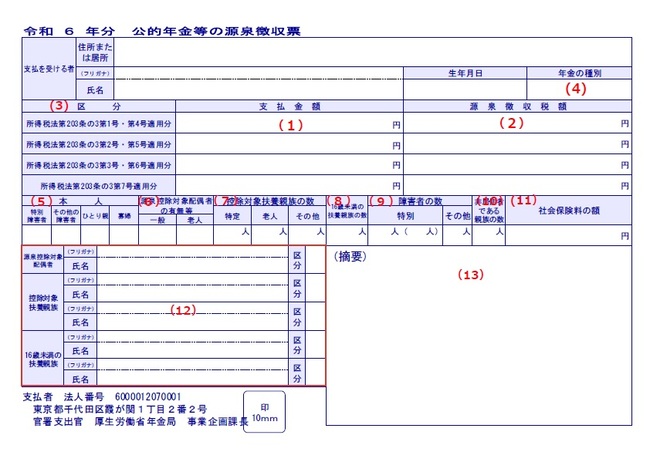
If you are a company employee, part-time worker, or temporary worker earning a salary, you will need a withholding tax statement when filing your tax return. Company employees usually receive one, but part-time workers and temporary workers may need to request one from their employer, so be aware of this.
New employees who have previously worked part-time may need to notify their previous employer, rather than their new employer
Be aware that you cannot carry forward losses in overseas forex trading

Domestic and overseas forex trading have different tax systems. If you are already using domestic forex trading, it's a good idea to check the differences in tax filing rules
The biggest difference in the rules is "how long losses can be carried forward."With domestic FX, you can carry forward losses for up to 3 years, but with overseas FX, you cannot.
For example, let's say you incurred a loss of 1 million yen in the first year, and then made a profit of 400,000 yen in the second year. Since you incurred a loss of 1 million yen in the first year, your net profit/loss in the second year will be -600,000 yen
If you were using a domestic FX broker at this time, you would not have to pay income tax because you are in the red. However, if you are using an overseas FX broker, you cannot carry forward losses, so you will need to file a tax return on the 400,000 yen profit
Therefore, those who are making profits using overseas forex trading should file a tax return every year
Tax rates differ between domestic and international markets
Tax rates differ between domestic and overseas forex trading. As previously mentioned, overseas forex tax rates range from 5% to 45%. However, domestic forex trading is subject to a self-assessment tax system, so the tax rate is fixed at 20.315%
| Domestic FX | Overseas FX | |
|---|---|---|
| tax system | Separate taxation upon declaration | Comprehensive taxation |
| tax rate | 20.315% | 5〜45% |
| Profit and loss carryforward | Up to 3 years possible | impossible |
| income classification | Miscellaneous income | Miscellaneous income |
For those who earn a lot of money, domestic FX trading can sometimes be more advantageous from a tax perspective
However, with overseas forex trading, you can trade with high leverage or make profits through cashback, so ultimately, it's up to each individual to decide which is more appropriate
[Tax Saving] Use expenses to reduce your taxes, even if only slightly

Money spent to earn miscellaneous income can be treated as an expense.For example, money spent on FX study groups or learning materials.
If your annual profit is 500,000 yen and your expenses are 500,000 yen, then your miscellaneous income is calculated by subtracting necessary expenses from your annual profit, so it would be 500,000 yen (profit) - 500,000 yen (expenses) = 0 yen
Everything needs to be recognized as an expense, but in this case, since the income tax is 0, no tax is levied
However, in order to treat it as a business expense, you will need proof such as a receipt or payment slip, so be sure to keep them safe
summary
This page explains the tax implications and filing procedures for cashback offers from overseas forex trading
Finally, let's review the important points
- Cashback is taxed just like profit
- However, this varies depending on your place of residence and the FX broker you use
- The income subject to filing a tax return is the profit earned from January 1st to December 31st
- Unrealized losses and unrealized gains are not subject to taxation
- When filing your tax return, it will be classified as miscellaneous income
- Losses cannot be carried forward
- If you want to reduce your taxes even a little, make good use of your expenses
Cashback from overseas forex trading is subject to taxation just like profits earned from trading. It is classified as miscellaneous income and is taxed at a rate of 5% to 45%
Whether you are a salaried employee or not, if your profits exceed 200,000 yen or 480,000 yen, you should definitely file a tax return
If you don't file a tax return, you may be subject to additional taxes, so be careful